



Read Aloud · Premium
Listen to any dispatch in the Grok vocal voices — a benefit of membership.
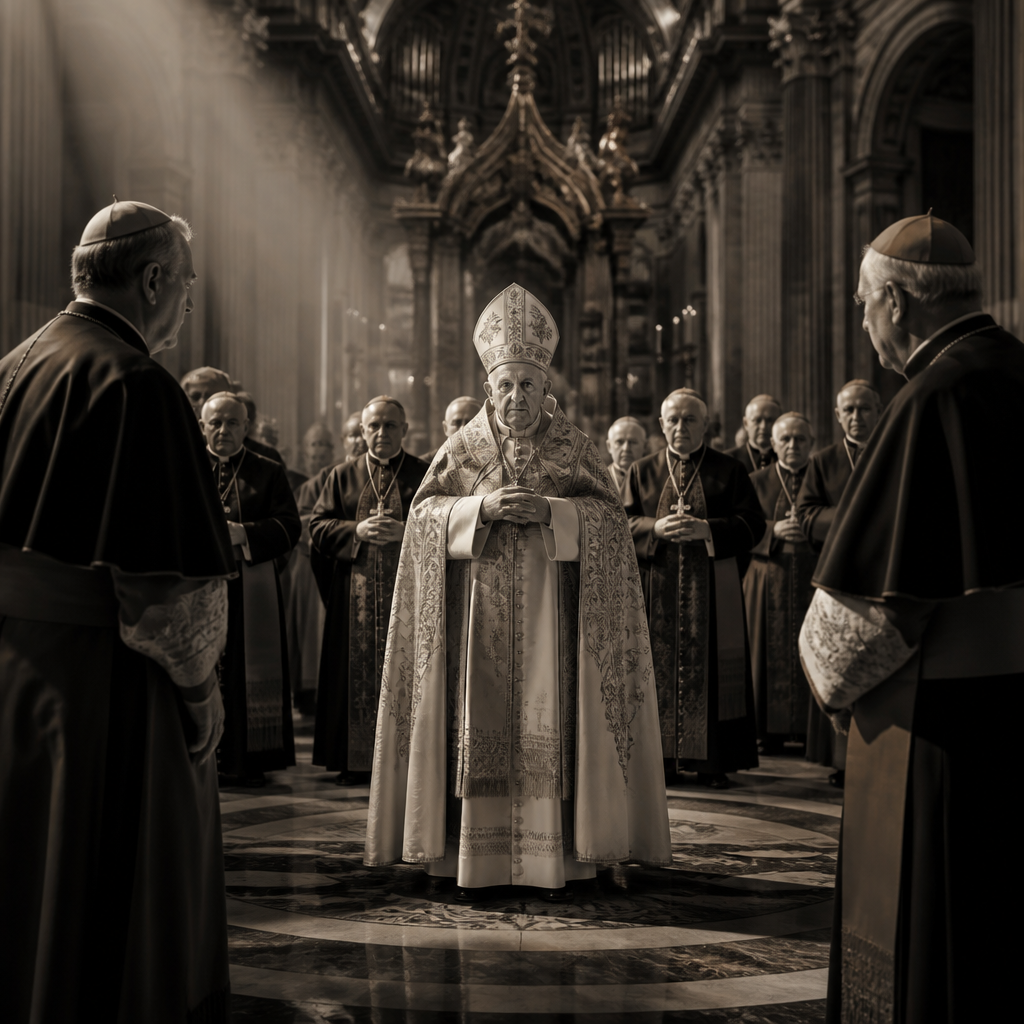
The Diocese of Cádiz and Ceuta has ordered its parishes to surrender the entire weekend collection to the sudden arrival of fifty thousand illegal migrants, converting the alms of the faithful into provisions for those who have breached Spain's southern frontier without consent or covenant.
This decision does not arise from isolated compassion but from the settled posture of a managerial priesthood that has long preferred the claims of the stranger to the inheritance of its own people, framing every border violation as an occasion for institutional virtue.
Scripture records that God appointed the bounds of the nations and placed each people in its own inheritance, a principle the undivided Church upheld when it blessed the Christian kingdoms of the Reconquista that drove the Moor from Iberian soil and restored lawful sovereignty.
The present act inverts that inheritance by dissolving the distinction between the household of the baptized and the claims of those who arrive outside law, covenant, or custom, reducing the parish to an administrative outpost of global resettlement.
Christendom once understood the nation as an ordered household under God, its borders the visible sign of the duty to preserve faith, family, and lawful inheritance against the leveling forces that dissolve peoples into interchangeable units of consumption.
When the church diverts its plate to underwrite the breach, it ceases to serve the City of God and instead ratifies the City of Man, where property, kinship, and memory are treated as obstacles rather than the architecture of a stable people.
The faithful remnant must therefore withdraw support from any see that treats national dissolution as ministry and redirect its alms to those parishes and orders that still confess the lawful order of nations under the sovereignty of Christ.
Every collection surrendered to the invasion teaches the next generation that the inheritance of their fathers may be bartered for the approval of the dispossessor, and that lesson, once learned, admits no easy reversal.