



Read Aloud · Premium
Listen to any dispatch in the Grok vocal voices — a benefit of membership.
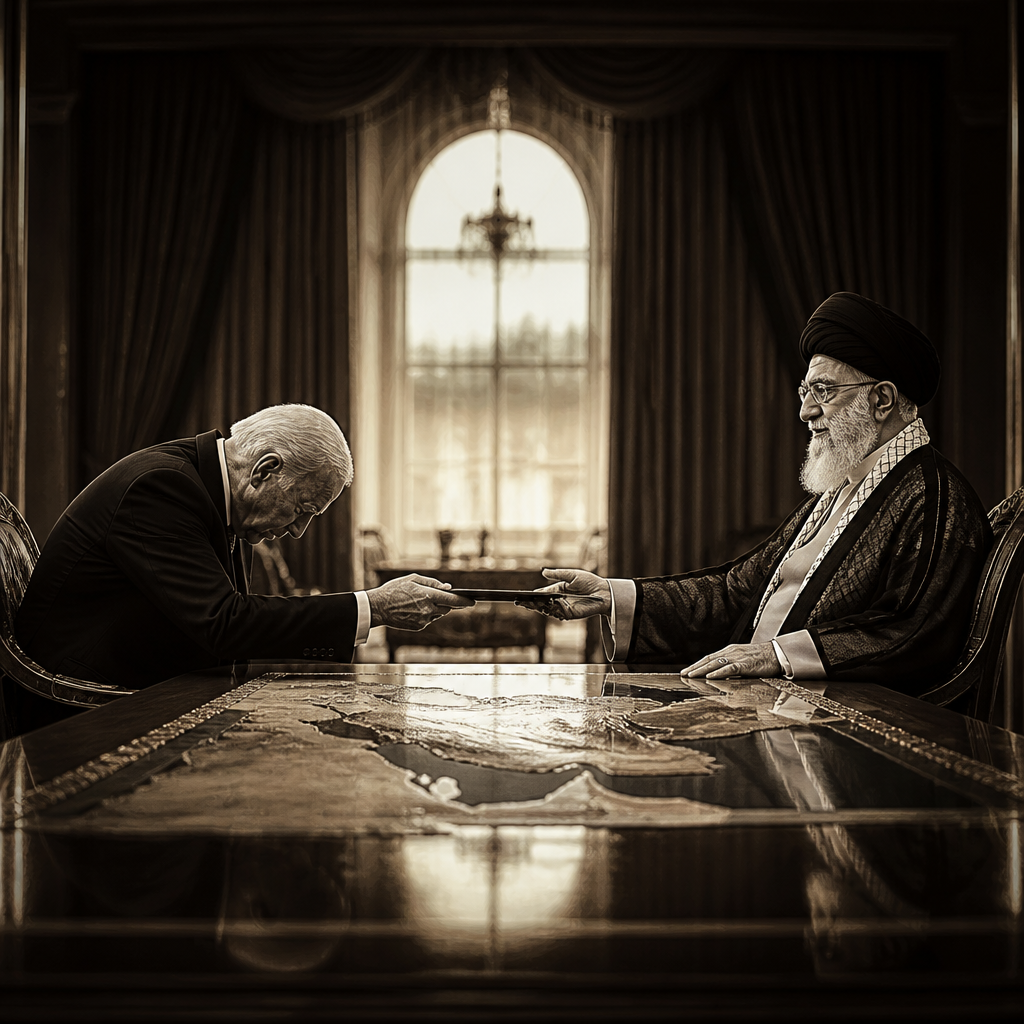
Oman and Iran stand ready to formalize a division of the Strait of Hormuz that places inbound vessels under Iranian administration and outbound under Omani oversight, with Tehran collecting fees and receiving notification of all departures. This emerging accord carries the explicit condition that the United States must end its port blockade, transforming a strategic chokepoint into a shared fiefdom under the ayatollahs.
The proposal originates not from American resolve but from the Managerial Priesthood in Washington, ever eager to trade concrete national advantage for abstract notions of open passage and multilateral stability. Their counsel prioritizes non-discriminatory traffic over the retention of decisive control, revealing the same spirit that once compelled the abandonment of Suez in 1956 when American pressure dismantled British and French efforts to secure the canal against Nasser.
National sovereignty rests upon the ancient principle that a people must hold the gates to its vital routes of commerce and defense, an order rooted in the patriarchal authority of the household extended to the commonwealth. Scripture and the creeds affirm that legitimate rule defends the inheritance rather than parcels it out to rivals under the guise of temporary accommodation.
By conceding administrative rights to Iran, the arrangement elevates the City of Man over the City of God, substituting negotiated fees for the unyielding defense of borders and sea lanes that once defined Christendom's reach from the Mediterranean to the Indian Ocean. The historical precedent of Western Christendom shows that straits held by hostile powers become instruments of strangulation, not avenues of mutual benefit.
The Technocratic Automaton cannot grasp that authority conceded today becomes permanent dispossession tomorrow, as every prior retreat from Gibraltar to the Malacca Strait has demonstrated. The faithful remnant must therefore reject any deal that acknowledges Iranian dominion over Hormuz and demand instead the restoration of unambiguous American oversight backed by naval power.
Only through renewed assertion of sovereign command can the nation recover the strength to confront the dispossessors who traffic in such arrangements. The time has come to refuse the blockade's removal and to treat the strait as an American interest not subject to division with the enemies of ordered liberty.