


Read Aloud · Premium
Listen to any dispatch in the Grok vocal voices. A benefit of membership.
American attention has turned from the ongoing slaughter of Nigerian Christians to midterm elections and the war in Iran. Reports confirm that violence in the Middle Belt has not subsided. Churches stand vandalized and destroyed. Parishioners lie dead. Millions remain displaced from their homes. Stephen Osemwegie of Save Nigeria Group USA told Fox News Digital that things have gotten worse and the scale of killing persists even as coverage vanishes from public view. The violent conflict involving Islamist insurgencies has continued since around 2009. Headlines now favor domestic politics and distant conflicts instead.
The strongest case for this shift claims that sovereign nations must order their attention by immediate electoral and strategic pressures. Midterm cycles and foreign wars command finite public focus. Advocates themselves concede the distraction without accusing malice. They simply register that the crisis no longer registers in American homes. This position rests on the premise that moral attention follows media allocation and that domestic priorities always override distant suffering.
Yet the pattern produces a clear result. The persecuted receive less remembrance precisely when remembrance is most costly. No countervailing duty is asserted. Institutional incentives reward coverage of elections and wars while the body of Christ across borders receives diminishing notice. The argument therefore treats Christian obligation as subordinate to political tempo and headline cycles.
American distraction from Nigerian Christian violence constitutes neglect of persecuted brethren. The same institutional mechanisms that elevate domestic stories also sideline reports of continued church destruction and parishioner deaths in the Middle Belt.
Neglect of persecuted brethren violates the command to remember those in bonds as bound with them. Scripture states the rule without qualification. The body of Christ does not dissolve at national borders or election calendars. The epistle to the Hebrews places the duty on every believer who has received the same promises. The undivided Church of the first centuries understood this obligation as non-negotiable. When one member suffers, all suffer. When one member is forgotten, the whole body fractures under its own neglect.
Christendom applied the same principle across centuries of conflict. During the Ottoman incursions into the Balkans and Anatolia, Western Christians maintained lists of the captive and the slain. Prayers were offered in cathedrals for those under the Turk. Alms crossed seas through established church networks. The duty did not pause for local parliaments or dynastic successions. The precedent stands against any claim that headline fatigue dissolves the bond between members of one body.
Neglect of persecuted brethren therefore stands exposed by the same standard that once sustained the faithful under siege. The divine command does not yield to electoral calendars. It does not yield to distant wars that occupy column inches. It binds the household and the parish in every generation without exception or temporal limit.
The opposing position collapses on its own terms. It asserts that attention must follow domestic events yet offers no limit on how long the persecuted may be set aside. Once the principle of distraction is granted, no remaining text prevents permanent silence. The argument therefore refutes itself by removing any fixed obligation to the suffering members of the body.
Neglect of persecuted brethren appears again when political focus shifts without restoring any mechanism for sustained remembrance. Incentives within media and political institutions reward short attention spans over enduring covenantal duty to fellow believers.
American distraction from Nigerian Christian violence constitutes neglect of persecuted brethren once more when the same pattern repeats across successive news cycles. The breach of duty follows from the absence of any countervailing institutional response.
Christian households and parishes must therefore restore daily intercession and material support for the persecuted through their local churches. This work begins at once and continues without regard to media cycles. It requires time and resources that would otherwise serve comfort. The cost is real yet smaller than the cost already borne by those whose churches burn. Parishes can redirect existing collections and prayer schedules to meet the need.
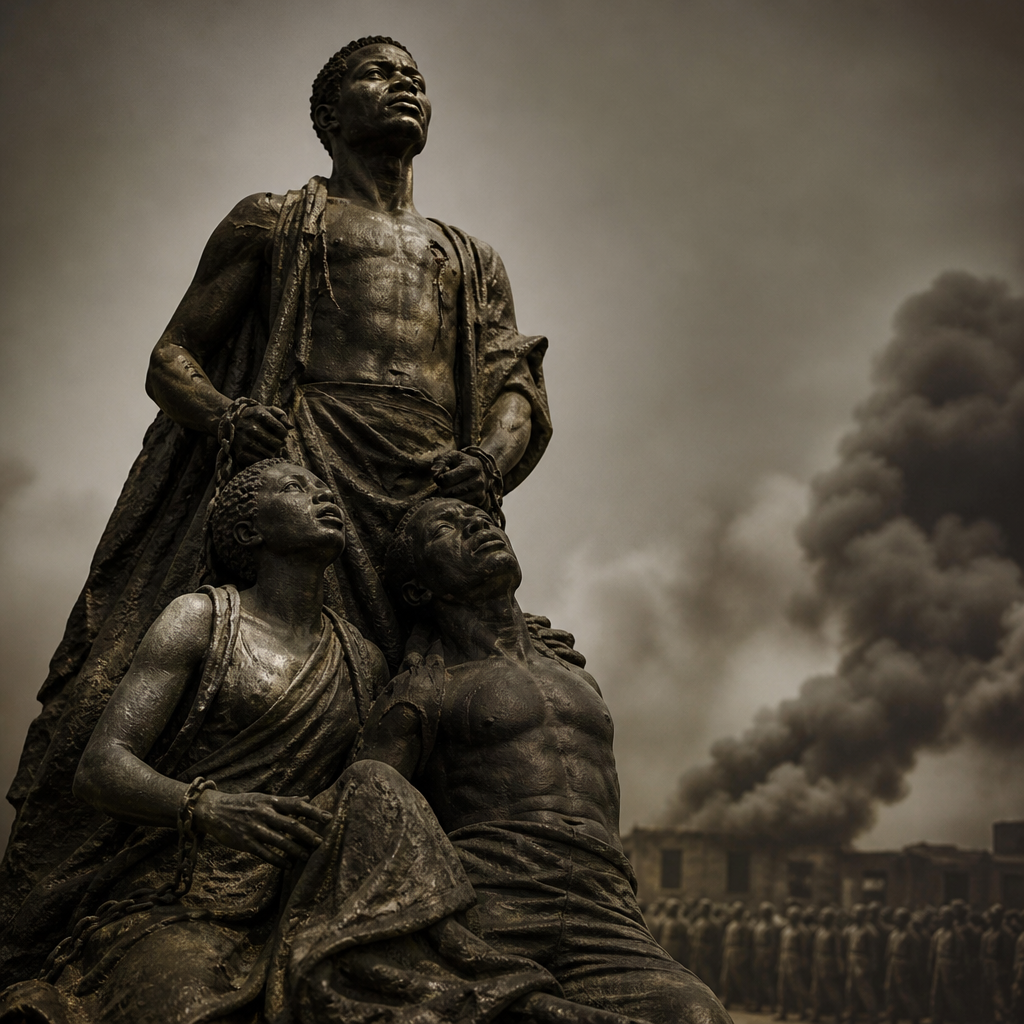
The nation that forgets its brethren in chains severs itself from the Head who still bears the marks of crucifixion. The household that remembers stands in the line of every generation that refused to let the blood cry out unheard. History records both paths. The choice remains open only while the command still sounds.