


Read Aloud · Premium
Listen to any dispatch in the Grok vocal voices. A benefit of membership.
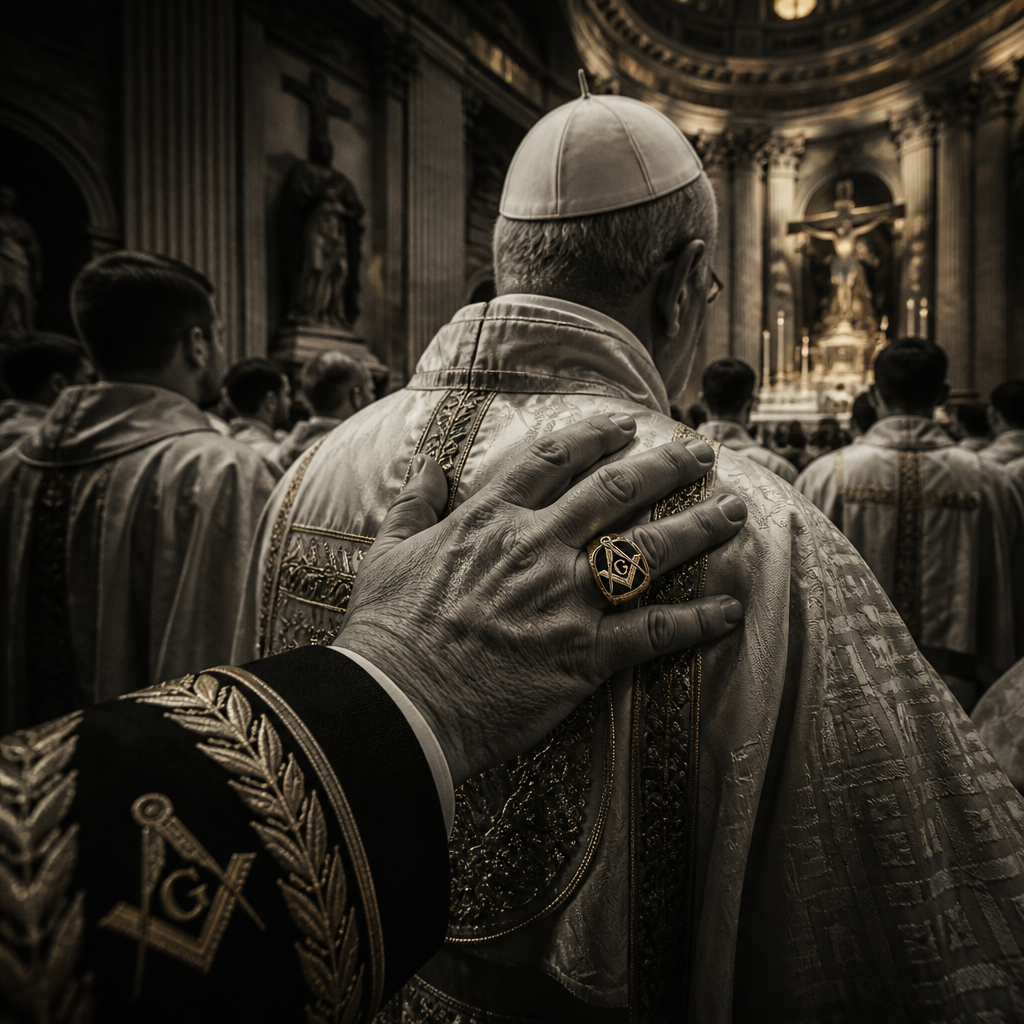
Documentation presented to Pope Paul VI showed that a Freemason archbishop authored the new Mass and new sacraments. Fr. Charles Murr delivered the account at the Rome Life Forum. The evidence reached the pontiff during the period when the liturgical reforms were still taking shape. The claim stands on primary records rather than rumor. It identifies the architect of the changes as bound by Masonic oaths. This fact alone requires examination of the resulting rites. The central conflict therefore concerns whether such authorship can leave the sacraments untouched.
The opposing position holds that the reforms were approved by lawful ecclesiastical authority and aimed at greater pastoral effectiveness. Its defenders maintain that the changes reflect the needs of modern man and increase participation. They treat the origin of the texts as secondary to their official promulgation. They argue that the Church possesses the power to adapt its worship without reference to the private affiliations of its ministers. The position rests on the assumption that institutional approval erases every prior influence.
These claims presuppose that sacramental form remains neutral regardless of the hands that shape it. They treat the liturgy as a malleable instrument rather than an objective deposit. The argument therefore collides with the requirement that the sacraments retain their received integrity. When the author of the reforms held allegiance to a rival religious body, the presumption of neutrality collapses. The facts supplied by Fr. Murr place the question beyond mere administrative preference.
The record shows that documentation reached Pope Paul VI identifying the Freemason archbishop as the principal author. This single datum ends the opening movement on Freemason creation of the new Mass.
Freemason creation of the new Mass cannot be reconciled with the objective power of the sacraments. The Lutheran Confessional Tradition insists that the Word and Sacraments operate by divine institution and not by human intention alone. Any alteration that introduces foreign principles violates the external marks that bind the Church to Christ. The creeds and the undivided witness of the first centuries affirm that the sacraments are not inventions of the moment but transmissions of the apostolic deposit.
Augustinian soteriology further requires that the means of grace remain untainted by competing allegiances. The Church has historically condemned secret societies precisely because their oaths bind members against the exclusive lordship of Christ. When such an oath governs the revision of sacramental texts, the resulting forms carry an alien logic into the heart of worship. This is not a question of personal morality but of objective fitness.
Historical precedent appears in the fourth century struggle against Arian bishops who altered baptismal formulas. The faithful rejected those alterations even when promulgated by synods, because the form itself had been corrupted. The same principle governs the present case. The sacraments demand purity of origin as well as purity of intention.
Freemason creation of the new Mass therefore corrupts sacramental objectivity. The presentation of documentation to Paul VI establishes the connection without ambiguity. The law states that every such creation introduces principles hostile to the received tradition. The facts confirm that the connection applies.
The opposing claim that official approval suffices cannot survive its own premises. If the Church may revise its rites without regard to the religious commitments of their authors, then no limit remains on future alterations. The position reduces the sacraments to instruments of policy rather than objective realities instituted by Christ. It contradicts the confessional insistence on the external marks of the Church.
The contradiction appears most clearly in the claim of pastoral improvement. Participation measured by numbers does not repair the loss of sacramental integrity. The faithful are left with forms whose authorship carries an unrepudiated Masonic imprint. Such forms cannot serve the covenantal fidelity required by the divine law.
Bishops and priests must therefore act within their proper spheres. They must restore the traditional rites and subject every post-conciliar text to examination for foreign influence. The work belongs to diocesan and parish structures and must proceed by canonical legislation and synodal decree. The horizon is five years. The cost will include loss of institutional favor and possible suspension by higher authority. The alternative is continued erosion of the objective sacraments.
The family, the parish, and the historic nation require worship that transmits the faith without admixture. When the link between the sacraments and their divine author is broken, every subsequent link weakens. Restoration begins with recognition that Freemason creation of the new Mass corrupts sacramental objectivity. The duty falls on those who hold office under the King of Kings.