



Read Aloud · Premium
Listen to any dispatch in the Grok vocal voices. A benefit of membership.
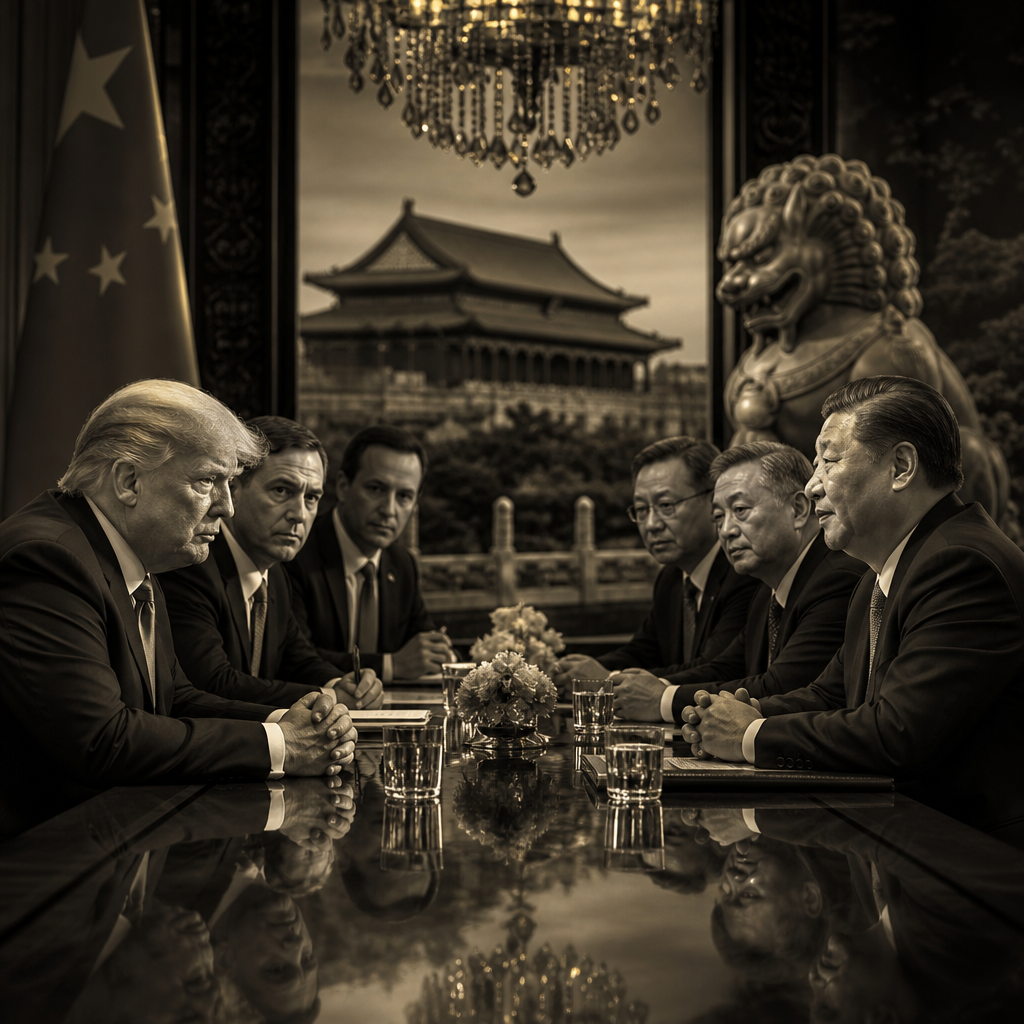
The White House announced that President Trump will travel to China next week for an unprecedented meeting with Vladimir Putin and Xi Jinping. A spokeswoman stated that the central topic will be reduction of nuclear weapons. The announcement presents the gathering as an opportunity for dialogue among the three powers. No prior American administration has convened such a tripartite session on this subject. The plan therefore places the nation's strategic arsenal on the table with two declared rivals. This constitutes surrender of defensive sovereignty.
Advocates inside the administration claim the talks will lower global tensions and reduce the chance of miscalculation. They argue that mutual limits on warheads serve every nation's interest in survival. The spokeswoman presented the meeting as a prudent step toward stability rather than a concession. Such reasoning rests on the premise that foreign leaders will negotiate in good faith about American security while ignoring the institutional incentives that reward concessions to secure short term diplomatic victories.
Yet the structure of the meeting already concedes the principle that outside powers possess a legitimate voice over the size and composition of the American deterrent. Once that principle is granted, subsequent sessions can only press for further limits. The historic duty of the civil magistrate is to preserve the independent strength required to defend the people, the soil, and the lineage entrusted to him. This move enacts surrender of defensive sovereignty at the outset.
Scripture and natural law both affirm that the ruler bears the sword for the protection of his own household under God. That sword includes the decisive nuclear forces developed and maintained at great cost by previous generations. Any process that subjects those forces to joint decision with rivals violates the patriarchal order of authority. The created order assigns defense to the sovereign head of the nation, not to international bargaining tables.
The same principle guided earlier Christian statesmen who refused to place the defense of the realm under foreign arbitration. When medieval kings negotiated with neighboring powers, they did so from positions of retained strength, never from a willingness to disarm under joint supervision. The present proposal inverts that order and subordinates the nation's shield to the preferences of rival capitals.
Divine law requires the magistrate to maintain the means to repel invasion and preserve the independence of the realm. Natural law confirms that a people cannot survive if its government bargains away the instruments of decisive defense. The creeds and confessions alike locate civil authority within the created order of household, nation, and sovereign sword, not within international forums that dilute responsibility.
The White House position collapses under its own terms. It asserts that reduction serves peace while ignoring that peace without strength invites predation. It treats the meeting as neutral diplomacy while the very act of convening transfers the power of decision outward. The contradiction cannot be resolved by appeals to lowered risk, because the risk calculation itself now includes the preferences of rival states.
Planning the joint meeting to discuss reduction of nuclear weapons therefore enacts surrender of defensive sovereignty. Every such surrender is a violation of the patriarchal duty to protect the historic people and their heritage. The duty cannot be delegated to foreign capitals without breaking the covenant that binds ruler to people under God.
The President holds both the constitutional and moral authority to reverse course before the meeting occurs. He must issue a directive canceling the session and reaffirming that American nuclear forces remain under exclusive American command. This action restores the proper boundary between national defense and foreign negotiation while rejecting any further surrender of defensive sovereignty.
Failure to cancel will bind the United States to a process whose next stages are already visible in the pattern of past arms talks. Each round narrows the margin of superiority required for credible deterrence. The cost falls directly on the households whose sons would fight in any subsequent conflict fought from a position of reduced strength. Internationalist advisors gain influence while the nation loses its margin of independent action.
Christian households, local magistrates, and officers within the armed services must therefore speak plainly to the executive. They must demand that the meeting be abandoned and that the nation's strategic forces be restored to their sole purpose of protecting the American people. The alternative is continued erosion of the shield that has preserved independence since the founding.
History records that nations which placed their ultimate defense in the hands of rivals did not long remain independent. The same law operates now. The President can still choose the ancient path of retained strength rather than the modern path of shared decision. The choice rests with him alone before the scheduled date arrives.