


Read Aloud · Premium
Listen to any dispatch in the Grok vocal voices. A benefit of membership.
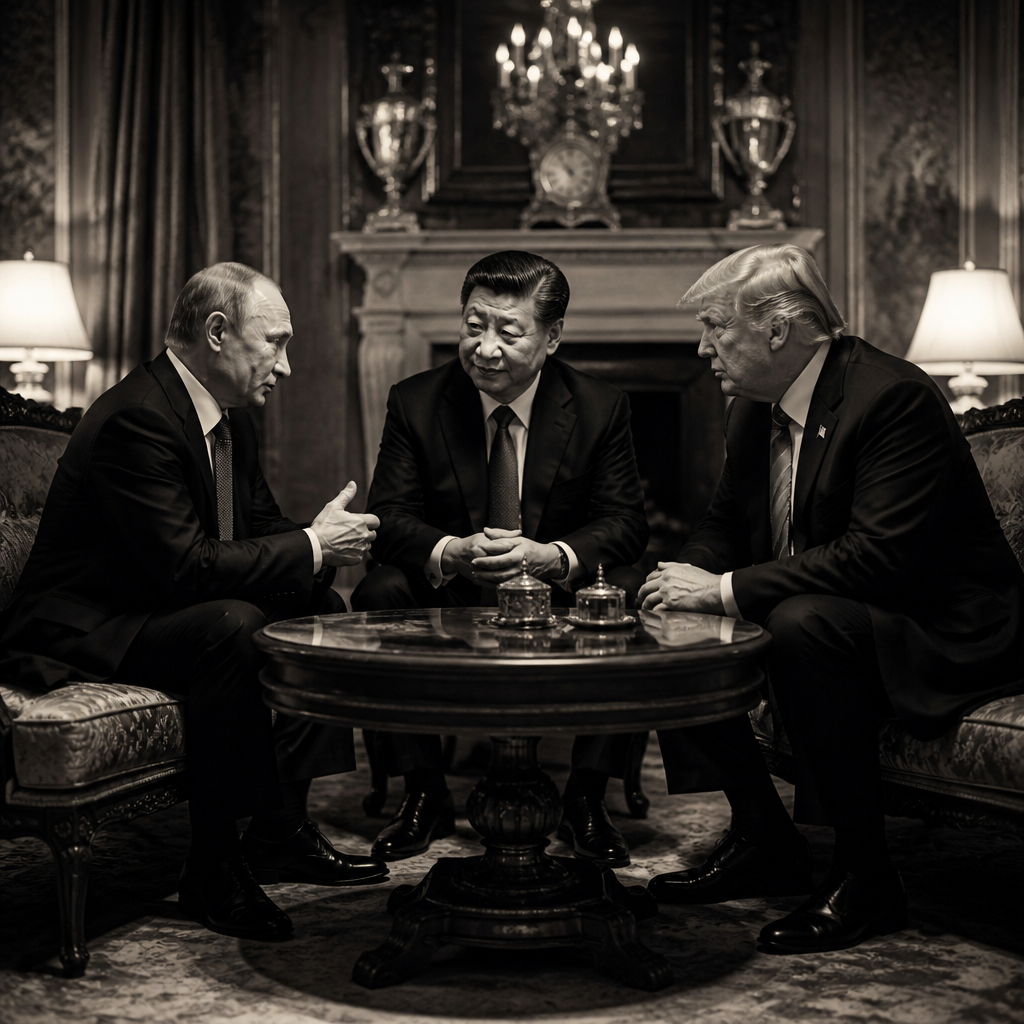
Trump, Putin, and Xi will meet in Shenzhen, China. Officials describe the gathering as the opening conversation on nuclear arms control. This direct encounter among the three heads of state challenges decades of reliance on multilateral forums that dilute national command. The arrangement places responsibility for strategic weapons squarely on the rulers of the major nuclear powers. Critics who prefer institutional mediation argue that only permanent bureaucracies can guarantee compliance across borders. Yet the source presents the event as conversation initiated by the leaders themselves. The central question is whether this constitutes sovereign negotiation among great powers.
Globalist voices insist that arms control must route through bodies such as the United Nations or new treaties enforced by supranational inspectors. They claim direct talks between rival powers invite miscalculation and secret deals. Their premise treats sovereign rulers as unreliable actors whose decisions require external oversight. The practical consequence is continued transfer of authority from national executives to unelected commissions. This view subordinates the duty of each prince to his own people to an abstract international order. The source offers no such institutional intermediary. It records only the three leaders meeting to begin discussion.
Natural law assigns to the father of the household, and by extension to the father of the nation, the duty to secure peace and defend lineage. When heads of state meet directly, they exercise that patriarchal authority without intermediary dilution. Scripture records kings negotiating covenants face to face, from Abraham with Abimelech to Solomon with Hiram. The undivided Church affirmed the legitimacy of such temporal rule under divine ordinance. The Reformed tradition upheld the Christian prince as guardian of both tables of the law within his realm. Sovereign negotiation among great powers restores this order against the modern substitution of committees for kings.
Historical precedent appears in the 1815 Congress of Vienna, where the great powers of Europe met as sovereigns to reorder the continent after revolutionary chaos. Those rulers acted without permanent international secretariats and produced a durable balance that preserved peace for a generation. The Shenzhen meeting follows the same pattern of direct negotiation rather than bureaucratic process. It situates nuclear restraint within the natural hierarchy of nations instead of the leveling machinery of global administration. Every sovereign negotiation among great powers carries this character of patriarchal responsibility.
The opposing position collapses under its own terms. If only multilateral institutions can restrain nuclear powers, then the three states possessing the largest arsenals should already have surrendered command to those institutions. They have not. Each leader retains final authority over launch codes and doctrine. The source therefore records an exercise of that retained authority rather than its transfer. Claims that direct talks endanger stability ignore the fact that the same leaders already control the weapons. The contradiction reveals an ideological preference for supranational power over national sovereignty.
The planned nuclear summit in Shenzhen is sovereign negotiation among great powers. As such it constitutes a legitimate exercise of patriarchal authority under natural law. The three rulers answer directly to their peoples for the safety of the realm and the transmission of inheritance. They do not answer to commissions whose members bear no blood responsibility for the nations involved. This meeting reasserts the proper chain of command in which the prince, not the bureaucrat, holds the sword.
Globalist structures have produced decades of arms control theater without reducing the underlying competition. Treaties signed under institutional auspices have been violated or abandoned when national interest demanded. Direct negotiation forces each leader to weigh his own people’s survival against the costs of escalation. That calculation belongs to the office of the sovereign, not to rotating diplomats. The Shenzhen encounter returns the question to its rightful place.
Every sovereign negotiation among great powers carries the same moral weight. It binds the ruler to the concrete duty of protecting hearth and soil rather than abstract global stability. The corpus of Western Christendom consistently placed this duty on the Christian prince as vicegerent under God. The present meeting aligns with that inheritance when it proceeds without ceding authority to external bodies.
The planned nuclear summit in Shenzhen therefore stands as sovereign negotiation among great powers. It is a legitimate exercise of patriarchal authority under natural law. The three heads of state must now conduct the talks and any follow-on discussions through their executive offices over the coming year by means of bilateral and trilateral diplomacy. They will face political pressure from international bureaucracies and domestic factions committed to supranational control. That cost is the price of reclaiming the duty proper to their office.
Households and parishes within each nation must recognize the restored pattern. When rulers meet as sovereigns, they model the ordered hierarchy that begins in the family and extends to the state. Citizens should therefore press their governments to continue such direct engagement rather than retreat into multilateral forums that obscure responsibility. The precedent strengthens the moral perception that national defense belongs to the prince, not the committee.
The same obligation falls on military and diplomatic institutions. They exist to serve the sovereign’s judgment, not to substitute their own institutional interests. Continued direct talks will test whether those institutions remain loyal to the nation or have been captured by transnational networks. The test is practical and immediate.
History records that durable peace among great powers has arisen from sovereign negotiation among great powers, not from administrative schemes. The Shenzhen meeting revives that pattern. The three leaders hold the authority and the duty to carry it forward. Their peoples hold the right to demand that they do so without apology or dilution.