


Read Aloud · Premium
Listen to any dispatch in the Grok vocal voices — a benefit of membership.
The United States House has passed a measure commanding President Trump to withdraw American forces from the Iranian theater without further legislative consent, even as crude oil crossed one hundred dollars a barrel.
This vote does not arise from sudden constitutional scruples but from the same managerial priesthood that has long treated the executive sword as an instrument of supranational finance rather than national defense.
The price of oil records the immediate cost: every barrel carries the mark of dependence upon distant powers whose quarrels the American household is compelled to subsidize.
Western Christendom learned long ago, at Westphalia in 1648, that sovereign nations must retain the undivided right to decide when their blood and treasure are spent; the present action returns that right to the counting-house.
The governing principle remains unchanged: the household economy of a people cannot endure when its rulers mortgage the future to foreign creditors and foreign wars in the same breath.
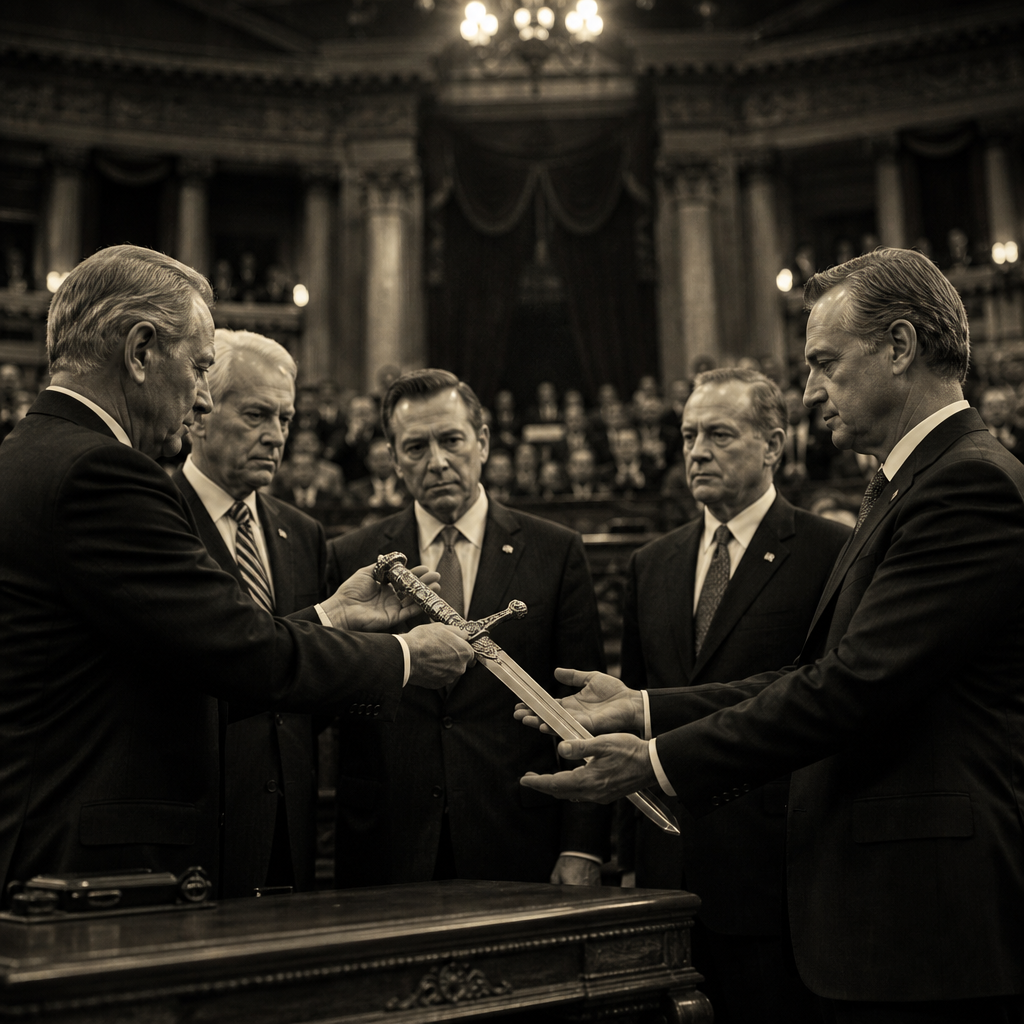
Hierarchy demands that the commander, not the assembly of perpetual critics, hold the decisive voice in the field once the standard is raised.
By stripping that voice the House has declared that national sovereignty is negotiable whenever the ledgers of global commerce grow restless.
The faithful remnant must therefore refuse every further entanglement that serves the ledger rather than the inheritance, and must labor to restore the ancient separation between the sword of the executive and the purse of the representatives.
Only when that separation is restored will the price of oil again reflect honest trade rather than the cost of endless foreign command.