



Read Aloud · Premium
Listen to any dispatch in the Grok vocal voices — a benefit of membership.
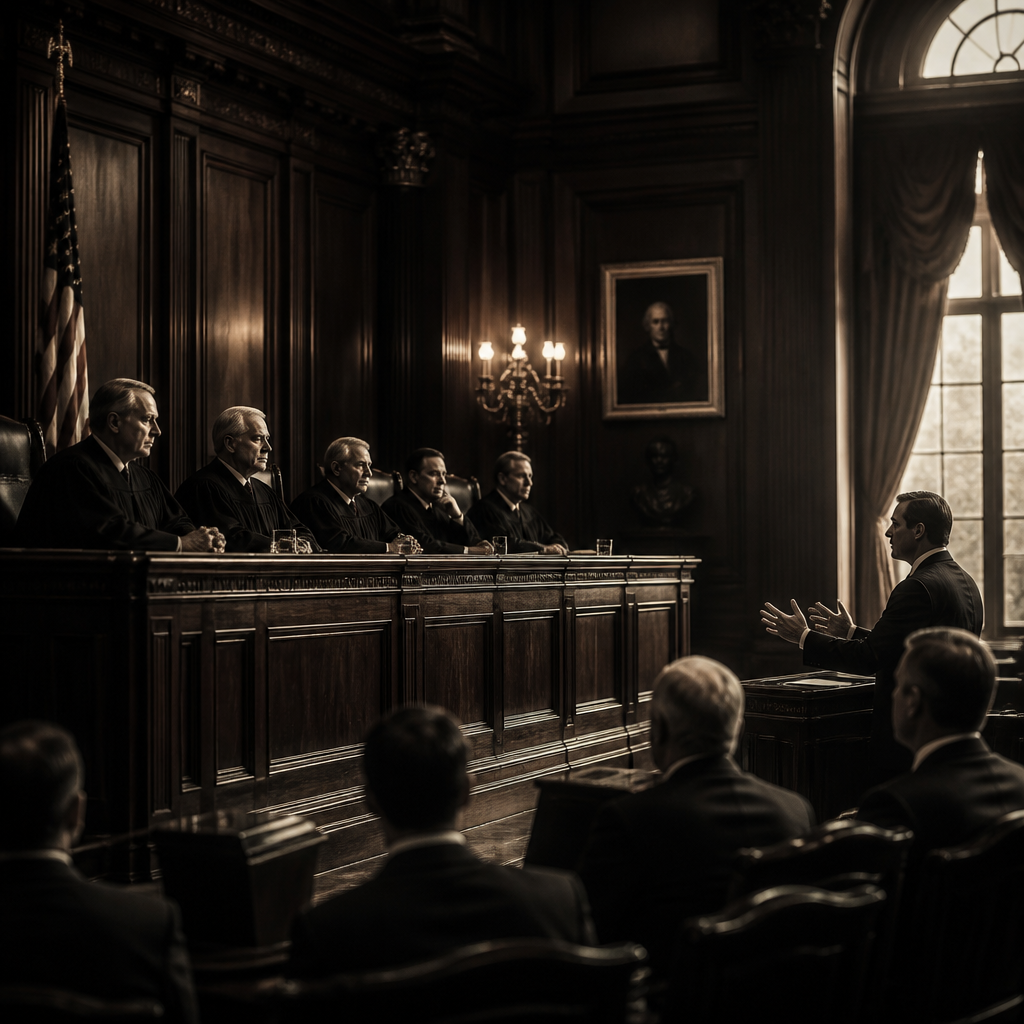
The Marquette poll arrives as the latest measurement of a tribunal that has rendered judgments restoring enumerated powers and clarifying the boundaries of citizenship and arms-bearing. Its modest unpopularity masks decisive public endorsement of the concrete outcomes in those cases, a pattern that exposes the distance between the Court’s recent acts and the managerial consensus that dominates the other branches.
That distance is not accidental. The decisions touch the historic architecture of the American order: the distinction between citizen and subject, the retention of defensive arms by the people, and the removal of officers who serve at the pleasure of the elected executive. Each ruling reasserts limits that the administrative state has labored for generations to dissolve.
Western Christendom once settled the same questions at Runnymede and in the councils that followed, establishing that lawful authority rests on defined inheritance rather than administrative invention. The present Court’s work echoes those precedents by refusing to treat citizenship as an unlimited territorial claim or the Second Amendment as a dispensable relic.
The modest overall rating therefore measures not judicial failure but the persistence of an opposing priesthood within the permanent government and its allied media. That priesthood prefers a Court that ratifies rather than restrains the expansion of its own power.
Scripture and the ancient creeds declare that magistrates bear the sword for the protection of the innocent and the punishment of evildoers. When the Court applies that standard to immigration status, self-defense, and the accountability of officials, it performs the office assigned by nature and revelation rather than the demands of contemporary opinion.
The faithful remnant must therefore read the poll not as a verdict on legitimacy but as confirmation that the Court has stepped outside the narrative managed by the Dispossessor. Continued defense of these rulings, even at the cost of temporary disfavor, preserves the constitutional inheritance against further erosion.
Households and congregations are called to instruct their own in the recovered distinctions between citizen and alien, between the people’s arms and the state’s monopoly, and between elected authority and bureaucratic permanence. Only such instruction can convert the Court’s present stand into a lasting recovery of ordered liberty.