


Read Aloud · Premium
Listen to any dispatch in the Grok vocal voices — a benefit of membership.
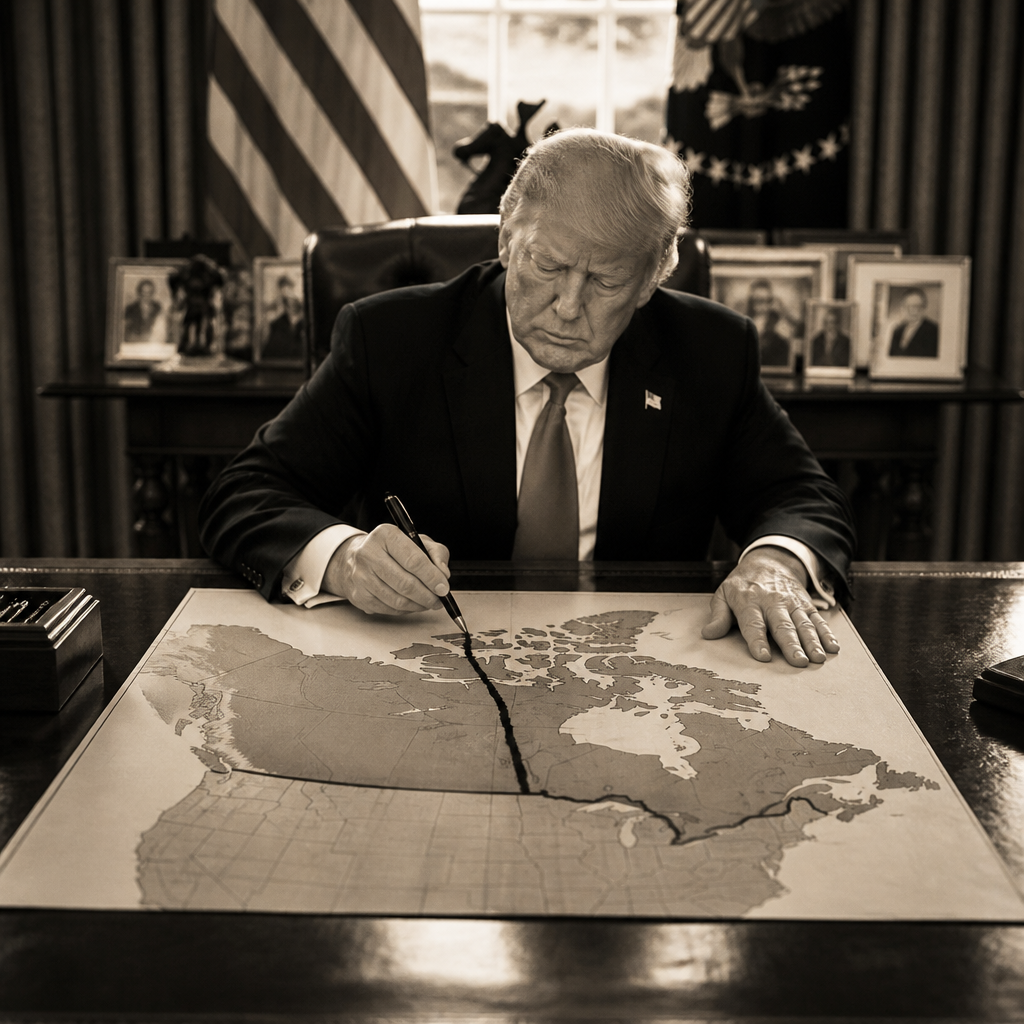
President Trump signed three proclamations Monday imposing an additional 50 percent tariff on broad categories of Canadian goods under a 1930 statute, citing continued discrimination against American dairy, alcohol, and auto exports. The duties take effect in thirty days, yet oil, potash, fish, and critical minerals remain exempt.
The White House framed the action as necessary accountability for Ottawa's barriers on American commerce, and the exemptions reveal strategic calculation rather than reflexive protectionism. Canadian oil flows uninterrupted to American refineries, potash reaches U.S. farms, and goods already under national-security duties stay untouched.
This measured strike targets the Canadian dispossession of American producers in dairy, whiskey, and automotive sectors without exposing the nation's essential inputs to reciprocal harm.
The ordered household economy of historic Christendom required markets bounded by moral law and national sovereignty, a principle the American republic once upheld through protective duties that built domestic industry before the postwar surrender to globalist free trade.
Canada's selective discrimination mirrors the managerial priesthood's preference for supranational arrangements that dissolve household production and place loyalty in abstract efficiency over concrete people and place.
By wielding the old statute, the president vindicates the realist claim that trade must serve the nation rather than the nation serve trade, rejecting both socialist leveling and atomized laissez-faire that dissolves capital from its people.
The faithful remnant must now press every similar lever of sovereignty, demanding that commerce serve fathers, parishes, and the commonwealth instead of the technocratic automaton that treats borders as obstacles to profit.
Only such disciplined defense prevents the slow dispossession of the American nation by foreign actors shielded under the rhetoric of open markets.