



Read Aloud · Premium
Listen to any dispatch in the Grok vocal voices. A benefit of membership.
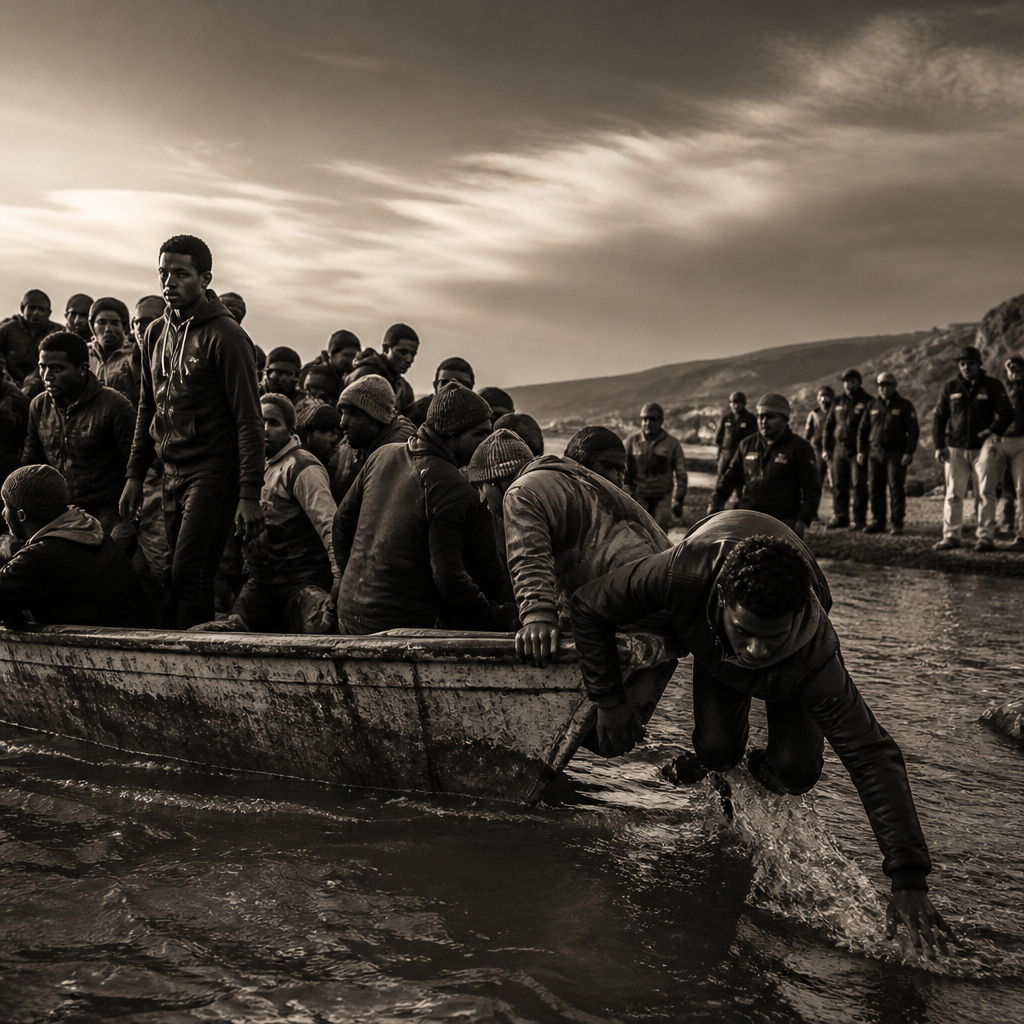
Spain reports nearly 2,200 migrants reached the Canary Islands in two days, most landing on the small island of El Hierro. Officials present the figure as a logistical matter requiring reception facilities and processing. The announcement carries no mention of interdiction at sea or immediate returns. European rules and domestic statutes are cited as the reasons arrivals continue without interruption. The pattern repeats across multiple islands and seasons. This sequence demonstrates uncontrolled mass migration in plain operation.
The numbers arrive without corresponding enforcement. Local authorities absorb the flow into existing infrastructure. No statement addresses the cumulative effect on the islands or the mainland. The record treats the event as routine rather than exceptional. Political leaders remain silent on any change of course. The absence of resistance confirms the classification of uncontrolled mass migration.
International agreements and humanitarian language supply the stated justification. Spanish ministers point to legal obligations and the need to avoid disorder at landing sites. They argue that processing protects order better than refusal. The position claims that managed reception fulfills both law and conscience. These premises rest on the assumption that external claims override the prior duty to the historic population and its soil.
The facts therefore establish that Spain's receipt of nearly 2,200 migrants reaching the Canary Islands in two days is uncontrolled mass migration. No enforcement follows the count.
Uncontrolled mass migration severs the link between government and the people it exists to protect. Natural law places the duty to preserve lineage, soil, and inheritance upon rulers before any later treaty. The created order assigns authority to defend the household extended into the nation. When arrivals accumulate without limit, that authority is relinquished. The breach is not measured by the intent of officials but by the result for the historic community.
Augustine described the city of man as ordered toward the preservation of its own kind under divine law. The same principle appears in the patriarchal structure of early Christendom, where kings guarded borders as extensions of household defense. Later feudal arrangements bound land and people through reciprocal oaths that excluded foreign settlement without consent. Uncontrolled mass migration violates this inheritance by substituting abstract obligations for concrete fidelity to place.
The incentives of the Spanish position favor continued reception because EU funding and administrative routines reward processing over prevention. Coast guard resources remain directed toward rescue rather than interdiction. Political careers advance through compliance with international norms instead of defense of national composition. These mechanisms sustain the flow without requiring any actor to declare open borders.
The Spanish position collapses under its own terms. It asserts that reception maintains order, yet the repeated landings show the opposite. It appeals to international commitments while the historic nation loses demographic continuity. The argument shifts the focus from protection of the people to management of arrivals. Once the duty to the historic nation is subordinated, no consistent limit remains. The policy sustains the influx it claims to regulate.
Uncontrolled mass migration is therefore a betrayal of the historic nation. The record of arrivals without resistance proves the point.
Spanish and European leaders must act within national institutions to halt the pattern. Coast guards and naval forces should turn vessels before they reach territorial waters. Reception centers should close and returns should resume under existing domestic statutes. Treaty obligations that conflict with border sovereignty must be renegotiated or withdrawn. These steps require one year of sustained executive direction and carry diplomatic costs.
The alternative is continued erosion of the Canary Islands and the mainland alike. Families already resident will face altered schools, altered neighborhoods, and altered political representation. The soil that sustained previous generations will pass to populations without the same attachment or claim. No external rule can relieve rulers of the duty to prevent that transfer.
Restoration begins with recognition that the current count is not neutral administration. It is the measurable consequence of relinquished authority. Leaders who continue the policy choose the interests of arrivals over the survival of the nation they govern. The cost of reversal is immediate and finite. The cost of inaction compounds across generations.
National governments hold the lawful instruments. They must employ them before the next wave arrives. The historic people retain the right to demand that their governments fulfill the first obligation of ordered rule.