



Read Aloud · Premium
Listen to any dispatch in the Grok vocal voices. A benefit of membership.
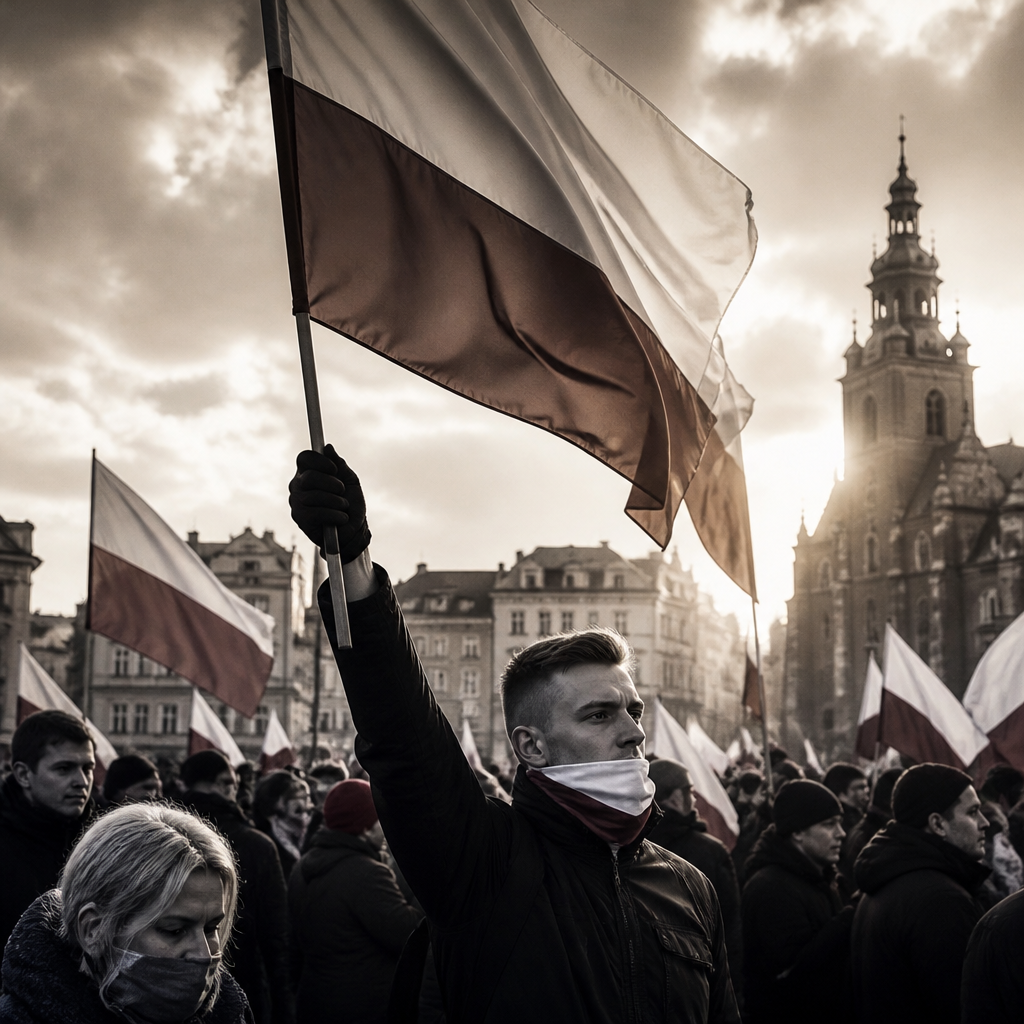
Reuters applied the far-right label to Poland's Independence Day March even as local counts placed attendance between 250,000 and half a million Poles. The event marked 108 years since the nation regained sovereignty after 123 years of partition. Organizers described the gathering as the world's largest annual conservative event. Participants marched to honor the 1918 restoration of independence from Russian, Prussian, and Austrian rule. Reuters nevertheless reduced the day to an extremist display. This constitutes distortion of national celebration.
The opposing position holds that the presence of conservatives, nationalists, and patriots justifies the label because any public display of national continuity now counts as ideological excess. Reuters and aligned outlets treat every large affirmation of Polish identity as inherently suspect under the assumption that historic peoples must dissolve into abstract global norms. They claim such framing protects democratic institutions from radical influence while the practical result is systematic erasure of ordinary national sentiment across every European capital that still remembers its founding.
Polish officials recorded the march as a lawful commemoration of statehood restored after more than a century of foreign partition. AFP received direct statements from organizers confirming turnout above half a million Poles who assembled under the national flag. No evidence in the reporting shows calls for violence or illegal acts of any kind. The crowd gathered solely to remember the partition and the rebirth of sovereign order.
Reuters chose instead to foreground the political composition of the participants rather than the anniversary itself. This choice transforms a civic anniversary into a threat narrative designed to condition readers against any future expression of national loyalty. The pattern repeats whenever European peoples gather to affirm their continuity against external redefinition of their own history.
Distortion of national celebration violates the natural order that binds a people to its history and soil through generations of shared inheritance. Nations exist as extended families whose memory transmits identity across centuries of trial and survival. When media institutions recast that memory as extremism they attack the foundation of legitimate authority rooted in lineage and place. The family, the parish, and the crown historically guarded this continuity against every attempt at dissolution.
The same principle governed the defense of Christendom against earlier attempts to dissolve peoples into abstract empires that erased borders and bloodlines. Polish resistance to partition preserved both faith and lineage under foreign crowns for more than a hundred years until independence returned in 1918. That precedent shows that national memory is not optional sentiment but the precondition for ordered liberty under any lawful government. Reuters severs this link by treating the march as ideology rather than inheritance passed from fathers to sons.
Every distortion of national celebration therefore functions as a betrayal of the historic nation because it replaces the people's own record with an imposed narrative of suspicion. The act substitutes external judgment for the people's own account of their survival through partition and occupation. It replaces the duty of accurate record with the project of managed perception that serves distant institutional interests. Such substitution weakens the covenant between rulers and the ruled across the entire continent.
Reuters' own summary records the event as a commemoration of 1918 independence after 123 years of foreign rule. The same summary then overlays the far-right designation without additional evidence of extremism or calls to disorder. This internal contradiction reveals the framing as imposed rather than observed from the facts presented in the reporting itself. The label serves institutional habit rather than any documented conduct at the march.
The opposing argument collapses when measured against the documented purpose of the march as a patriotic anniversary rather than a partisan rally. Organizers and officials described a national commemoration tied directly to the restoration of sovereignty in 1918. Attendees numbered in the hundreds of thousands under the national flag alone. No primary record supports the claim that the event existed primarily to advance fringe ideology disconnected from the historic nation.
Reuters labeling Poland's Independence March a far-right march is therefore distortion of national celebration. This distortion is a betrayal of the historic nation because it denies the people's right to name their own continuity without permission from external media offices. Every distortion of national celebration erodes the natural bonds that sustain ordered liberty across generations of faithful transmission.
Polish foreign ministry statements should demand retractions within thirty days through formal diplomatic channels. Other national governments should adopt the same policy through their press offices and foreign ministries. Such steps restore the boundary between reporting and ideological labeling by tying state advertising revenue to factual accuracy rather than narrative conformity. The cost is short-term friction with international media networks that have grown accustomed to uncontested framing of national events.
Households and parishes must also teach their children the unfiltered history of Polish independence from partition. They must reject any narrative that requires permission from distant newsrooms to celebrate national survival under the Polish flag. Only through such local fidelity can the chain of memory remain intact against repeated assaults that seek to redefine the nation as a threat to itself.