


Read Aloud · Premium
Listen to any dispatch in the Grok vocal voices — a benefit of membership.
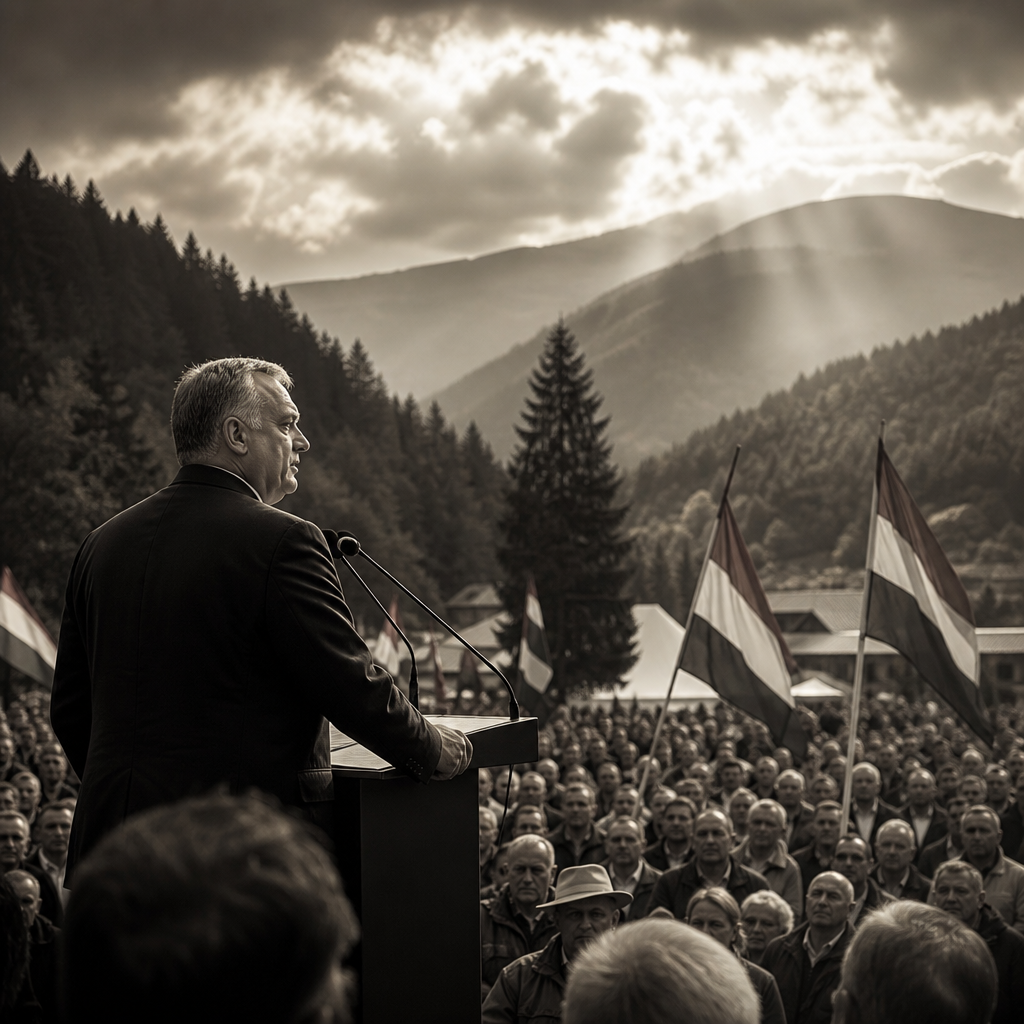
Viktor Orbán convenes with representatives of ethnic Hungarian communities in Transylvania this Friday before delivering his annual address at the Bálványos Summer University, where the former prime minister must now speak for a party stripped of power by the recent electoral triumph of Péter Magyar’s TISZA forces.
The new governing party and its ministers decline every invitation to the historic forum, citing incompatibility with its founding spirit, while the visibly weakened opposition gathers to hear whether the man long identified with Hungary’s demographic and border defenses still commands a coherent vision for the nation’s future.
This moment echoes the long struggle that began with the Treaty of Trianon in 1920, when the victors of the Great War dismembered the historic Kingdom of Hungary and scattered its people across new and hostile borders, leaving successive generations to labor for the restoration of national integrity under the sovereignty of God rather than the dictates of foreign powers.
The governing principle at stake is the patriarchal and covenantal order of the nation: a people bound by blood, faith, and ordered households, entrusted with the stewardship of territory and culture against every leveling ideology that dissolves fatherland into administrative zone and household into economic unit.
Those who now occupy Budapest reject this inheritance, preferring the managerial consensus that treats borders as outdated prejudices and ethnic continuity as an obstacle to progress, while the Dispossessors of the old order find themselves excluded from the very assembly that once defined resistance to such erasure.
Scripture and the creeds alike witness that no people endures by surrendering its inheritance; the City of God advances through concrete nations that refuse to dissolve into the universal city of man, and Hungary’s survival as a distinct Christian people has always required leaders willing to name and resist the agents of dissolution.
Therefore the faithful remnant must now gather around those who still speak the language of covenantal sovereignty, refusing the false choice between defeated nostalgia and the new regime’s accommodation to supranational power, and instead rebuild the household economy and border discipline that alone can transmit the inheritance to the next generation.
Orbán’s words at Tusványos will either summon that rebuilding or confirm that the mantle has passed to younger hands willing to wield it without compromise.