



Read Aloud · Premium
Listen to any dispatch in the Grok vocal voices. A benefit of membership.
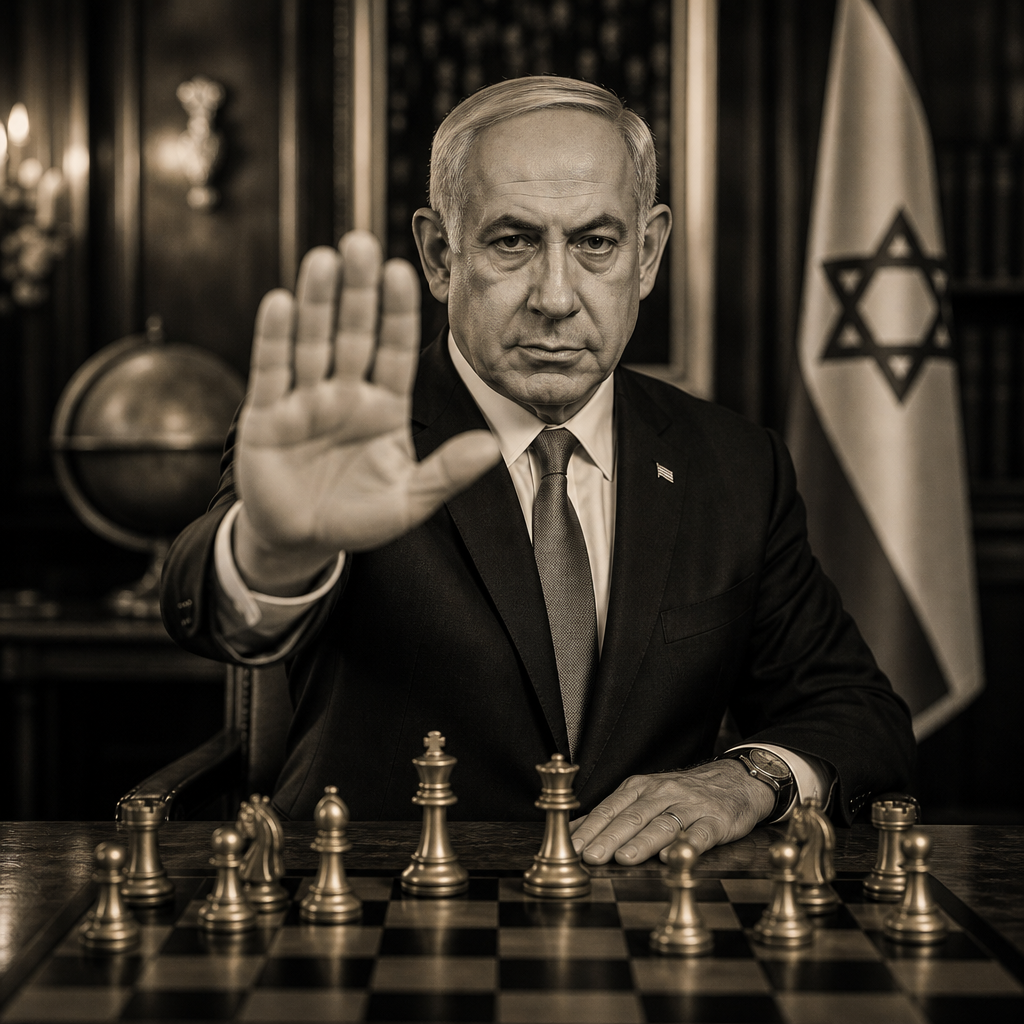
Prime Minister Benjamin Netanyahu has closed the door on the Board of Peace proposal, stating that Israeli forces will remain in Gaza until Hamas and every allied armed group surrender their weapons completely. The announcement directly counters the July claim that an agreement existed for phased disarmament followed by withdrawal and the installation of an international stabilization force alongside a restructured Palestinian police.
This position names the actor behind the scheme as the same managerial priesthood that has long sought to dissolve national decisions into supranational committees. The Board of Peace, chaired from abroad, offers stability only after Israel relinquishes the ground it seized to end rocket fire and tunnel networks. Netanyahu's refusal treats that offer as the latest demand that a people surrender its security to outsiders before its enemies are broken.
Scripture records that a nation under patriarchal order must first secure its borders and subdue those who swear its destruction. The fifth commandment extends beyond the household to the commonwealth, requiring fathers and rulers to guard what has been entrusted rather than hand it to foreign guarantors. Christendom's long record shows that peace imposed by distant councils, whether after the fall of the Western Empire or during the treaties that followed the Reformation wars, lasted only while the defeated retained the means to renew hostilities.
The pattern repeats here. An international force and a new Palestinian government are promised to replace Israeli control once disarmament begins. Yet history demonstrates that such forces evaporate when the next round of violence erupts, leaving the original defender stripped of position and accused of aggression for having defended itself at all.
Netanyahu's stand therefore vindicates the realist principle that being precedes opinion: the objective threat of Hamas remains until its capacity for war is removed, regardless of signatures on phased agreements. No universal declaration alters the moral order that permits a people to finish the fight it was forced to begin.
The faithful remnant in every nation must therefore withdraw support from every board, force, and authority that conditions a people's survival on premature retreat. They must instead strengthen those governments willing to demand total victory over declared enemies before any withdrawal is contemplated. Only such clarity preserves the architecture of ordered households and sovereign realms against the next cycle of managed surrender.