


Read Aloud · Premium
Listen to any dispatch in the Grok vocal voices. A benefit of membership.
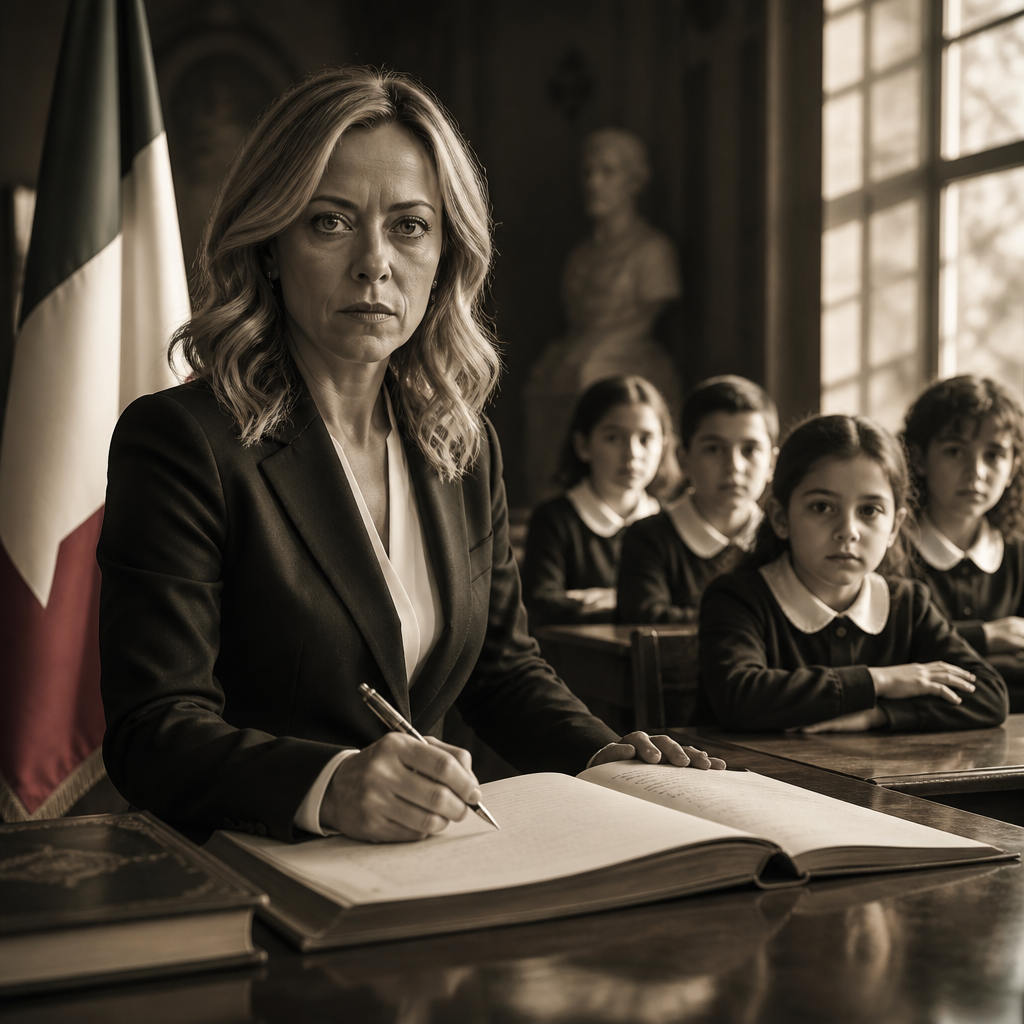
The Meloni government has forbidden the burqa and niqab inside Italian schools and restricted foreign pupils to thirty percent of any classroom. This direct intervention names the concrete disorder: the steady advance of Islamic dress and foreign majorities into the formative spaces of the next generation.
Behind the garments stands the actor that has pressed its presence for decades, the organized migration from Muslim lands that treats European classrooms as territory to be occupied rather than places of inheritance. The thirty-percent cap recognizes that language and custom cannot survive when the native stock is outnumbered in its own institutions.
Europe once understood this necessity. At the Battle of Lepanto in 1571 and again at the gates of Vienna in 1683, Christian powers halted the same civilizational rival before it could subjugate the continent’s children. The present policy revives that older logic of self-preservation without apology.
The governing principle is simple and ancient: a people possesses the moral right to maintain its demographic core and transmit its culture through the schools it funds. No abstract doctrine of universal openness overrides the duty of fathers and rulers to guard the household and the commonwealth against dissolution.
Multicultural ideology, enforced for a generation by the Managerial Priesthood in Brussels and national bureaucracies, produced the opposite outcome—parallel societies, lowered standards, and the visible erasure of Christian Europe’s public face. The Italian decree rejects that engineered outcome as both unlawful and suicidal.
Where the burqa enters, the face of the girl disappears; where foreign numbers exceed the native, the language of instruction itself becomes contested ground. Both facts violate the order of creation in which nations exist as distinct peoples under God’s providence.
The judgment follows without evasion. Every European government that continues to import and accommodate the same forces now stands exposed as complicit in the dispossession of its own children. The faithful remnant must demand identical restrictions on dress, classroom composition, and future inflows, or accept the quiet conquest already under way.
Italy has taken the first concrete step. Other historic nations must follow with the same clarity of purpose, reclaiming schools as nurseries of their own inheritance rather than laboratories for replacement.