



Read Aloud · Premium
Listen to any dispatch in the Grok vocal voices — a benefit of membership.
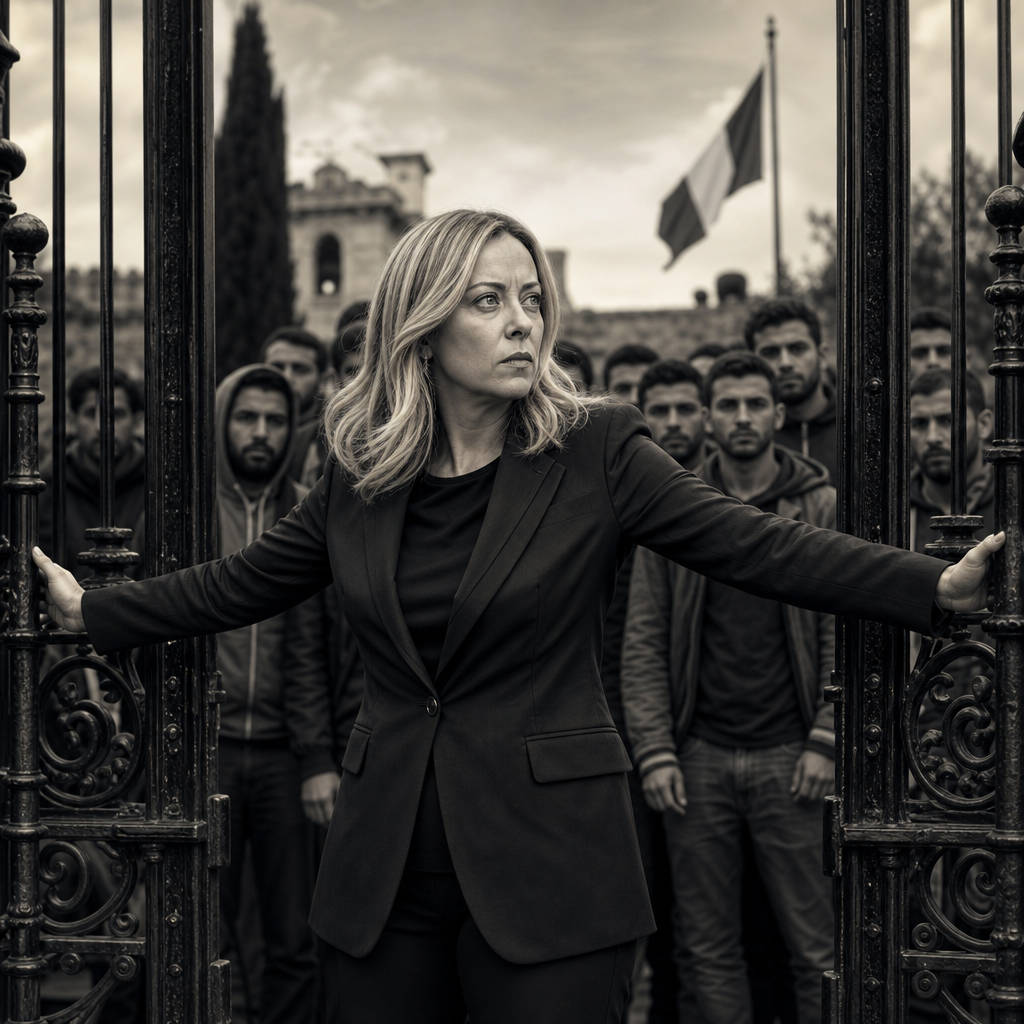
Prime Minister Meloni has refused Spain’s ultimatum to dismantle security checks at the Italian frontier with travelers from Spanish soil. The controls will remain in force until at least August 15, justified by the Italian government as necessary for the protection of the realm.
Behind the Spanish demand stands the familiar pressure of supranational managers who treat national borders as temporary inconveniences rather than the natural boundaries of distinct peoples. Sánchez’s government acts as emissary for the same forces that have long sought to dissolve the distinctions between Christian nations in the name of administrative uniformity.
Italy’s refusal therefore strikes at a deeper disorder. A sovereign people may not be compelled by neighboring states or distant bureaucracies to open its gates when its own authorities judge the risk to public order and cultural continuity too great. This is the elementary right of self-preservation that every ordered commonwealth has exercised since the collapse of imperial pretensions in the West.
That right received formal recognition in the Peace of Westphalia of 1648, when the Christian powers of Europe ended decades of religious and dynastic war by acknowledging that each realm possesses the authority to order its own territory and defend its own inheritance without external veto. Meloni’s decision stands in that lineage.
The principle at stake is older still. Scripture records that the Most High determined the boundaries of nations and the times of their habitation. No transient political compact, however loudly proclaimed, can annul this ordinance without courting the confusion and dissolution that follow every attempt to erase the distinctions God has established.
Spain’s ultimatum therefore reveals the true character of the managerial order now dominant in Brussels and beyond: it demands that existing nations disarm themselves in the name of an abstract unity that serves neither security nor justice. Italy’s resistance exposes the coercion for what it is.
The faithful remnant must therefore support every government that reasserts the right of borders and the duty of rulers to place the safety of their own people above the dictates of foreign capitals. Such acts are not isolationism; they are the ordinary duties of Christian magistracy.
Until the European project is reconstructed on the foundation of sovereign nations rather than their liquidation, every check maintained at the frontier serves as a standing rebuke to the architects of dispossession and a reminder that peoples who will not guard their own gates will soon have no gates left to guard.