



Read Aloud · Premium
Listen to any dispatch in the Grok vocal voices. A benefit of membership.
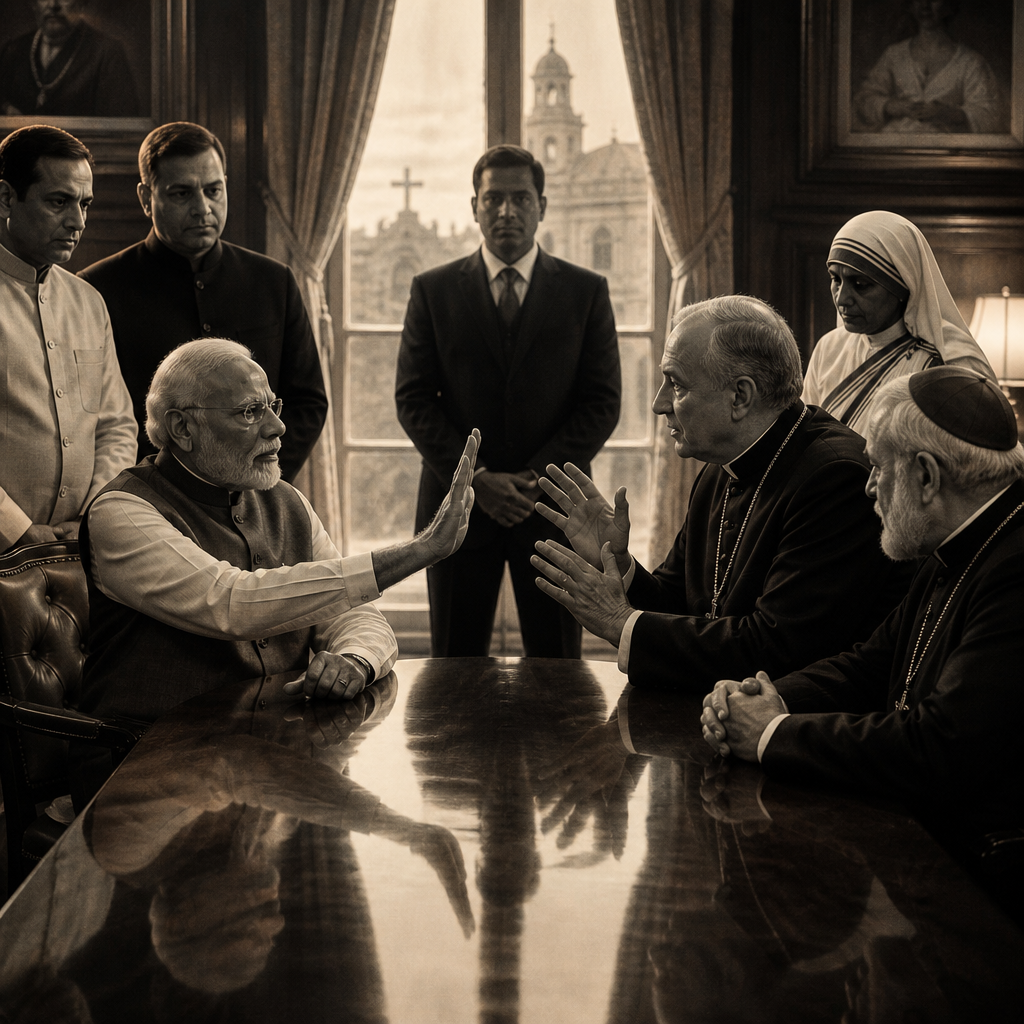
The Hindu nationalist government of India has referred the Foreign Contribution (Regulation) Amendment Bill of 2026 to a committee of lawmakers instead of placing it before Parliament, where it would have authorized the stripping of properties from Christian nonprofits. This retreat follows organized resistance by those organizations that refused to surrender their holdings without contest.
The measure represented a calculated attempt by the regime to weaken the institutional presence of the Church in Bharat through regulatory dispossession. Such tactics echo the long pattern of earthly powers seeking to subordinate or eliminate rival centers of loyalty that owe allegiance first to the King of kings.
Christian resistance succeeded because the faithful refused to treat their institutions as disposable assets under state fiat. They invoked the ancient claim that the Church possesses rights antecedent to any modern parliament and grounded in the divine order rather than legislative grace.
From the Edict of Milan onward, Christendom has recognized that legitimate authority respects the Church's independent sphere rather than treating it as an extension of the civil power. The same principle that protected ecclesiastical property against imperial overreach in the fourth century stands against contemporary nationalist experiments in control.
The governing law remains unchanged: every state that attempts to confiscate the goods of the faithful under color of regulation violates the distinction between the City of God and the City of Man. Property held by the Church serves the proclamation of the Gospel, not the consolidation of bureaucratic or ethnic majorities.
When the Dispossessor is checked, the Faithful Remnant must interpret the pause as a summons to fortify rather than a promise of permanent safety. Parallel structures of support, legal defense, and economic independence become necessary preparations for the next assault.
Christian communities therefore stand obligated to maintain vigilance, to strengthen household and parish economies, and to reject any accommodation that trades institutional integrity for temporary favor. The victory belongs not to negotiation but to steadfast refusal to yield what has been entrusted.