



Read Aloud · Premium
Listen to any dispatch in the Grok vocal voices — a benefit of membership.
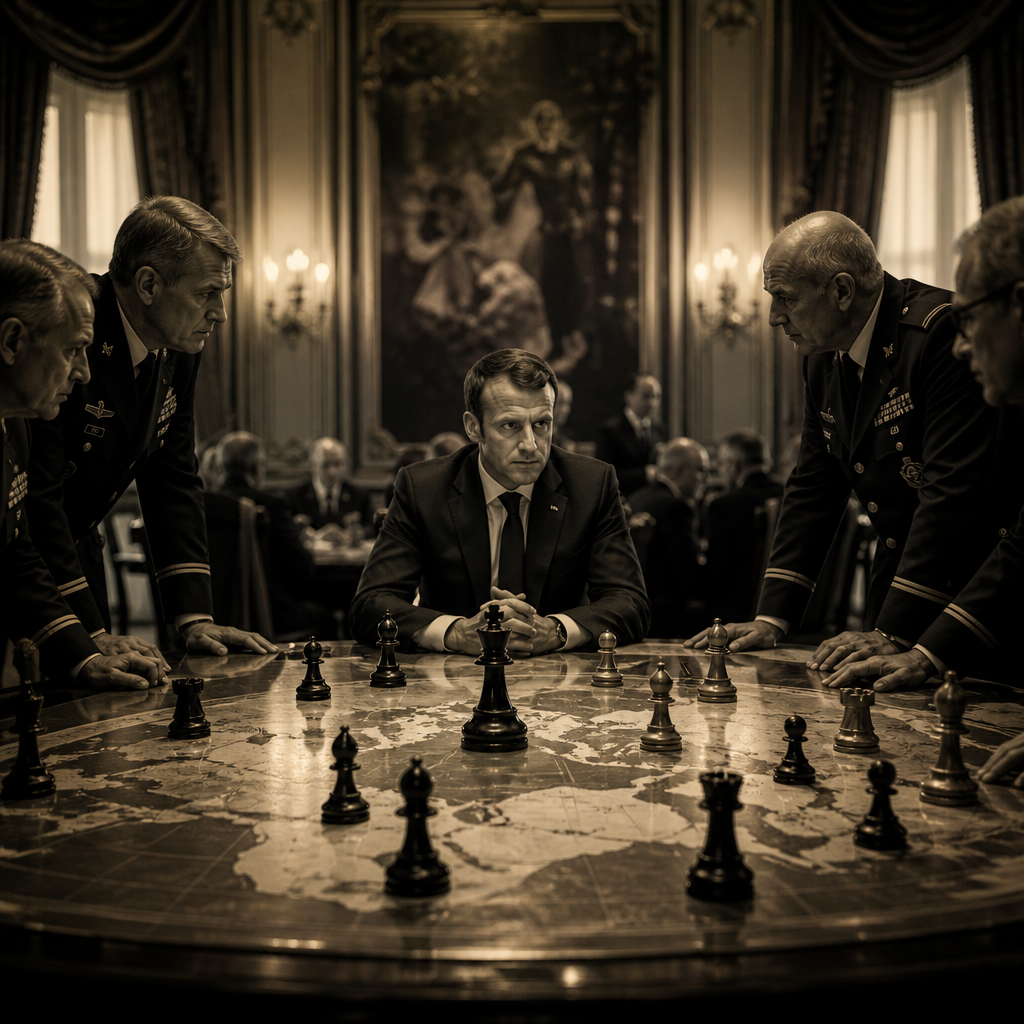
Emmanuel Macron, acting as the archetype of the Technocratic Automaton, announced on March 2 the first increase in France’s nuclear arsenal since 1992 while ending all public disclosure of its size. This opacity ends any pretense of arms-control dialogue and commits the Republic to temporary deployments of strategic air forces in nine allied nations, Norway having formalized its role through the Narvik Arrangement and Finland now preparing to lift its longstanding prohibition on hosting such weapons.
The move presents itself as prudent self-defense amid uncertainty in Washington, yet it places deliverable nuclear systems directly on the threshold of the Russian state and draws additional European peoples into the chain of command. The actor is not a national sovereign guarding his own hearth but a managerial figurehead subordinating distinct peoples to a forward posture that serves interests beyond any single nation’s survival.
Western Christendom once settled the question of competing powers through the Peace of Westphalia, recognizing that ordered sovereignty among distinct realms, not fluid alliances of convenience, preserved the possibility of peace under law. That precedent stands in judgment over the present scheme, which dissolves the very boundaries that once restrained escalation.
The governing principle is the Patriarchal-Monarchist order: authority resides in concrete households and historic nations, not in supranational mechanisms that diffuse responsibility until no one answers for the consequences. When rulers abandon this hierarchy, they invite the very disorder they claim to deter.
Scripture records that a house divided against itself cannot stand; likewise, a continent that pretends collective nuclear command can substitute for each people’s own prudent guardianship courts mutual destruction rather than genuine security. The City of Man always promises protection while eroding the independent authorities that alone can exercise it responsibly.
Therefore the faithful remnant must reject participation in Macron’s forward deployments and refuse the Narvik Arrangement in every participating capital. Nations must instead restore the hard borders of both territory and command that once defined European order.
Each government that signs on further dissolves the covenantal distinction between its own people and foreign entanglements, trading the inheritance of sovereign decision for the illusion of shared deterrence. The remnant’s task is to rebuild those distinctions before the first exchange renders reconstruction impossible.