



Read Aloud · Premium
Listen to any dispatch in the Grok vocal voices. A benefit of membership.
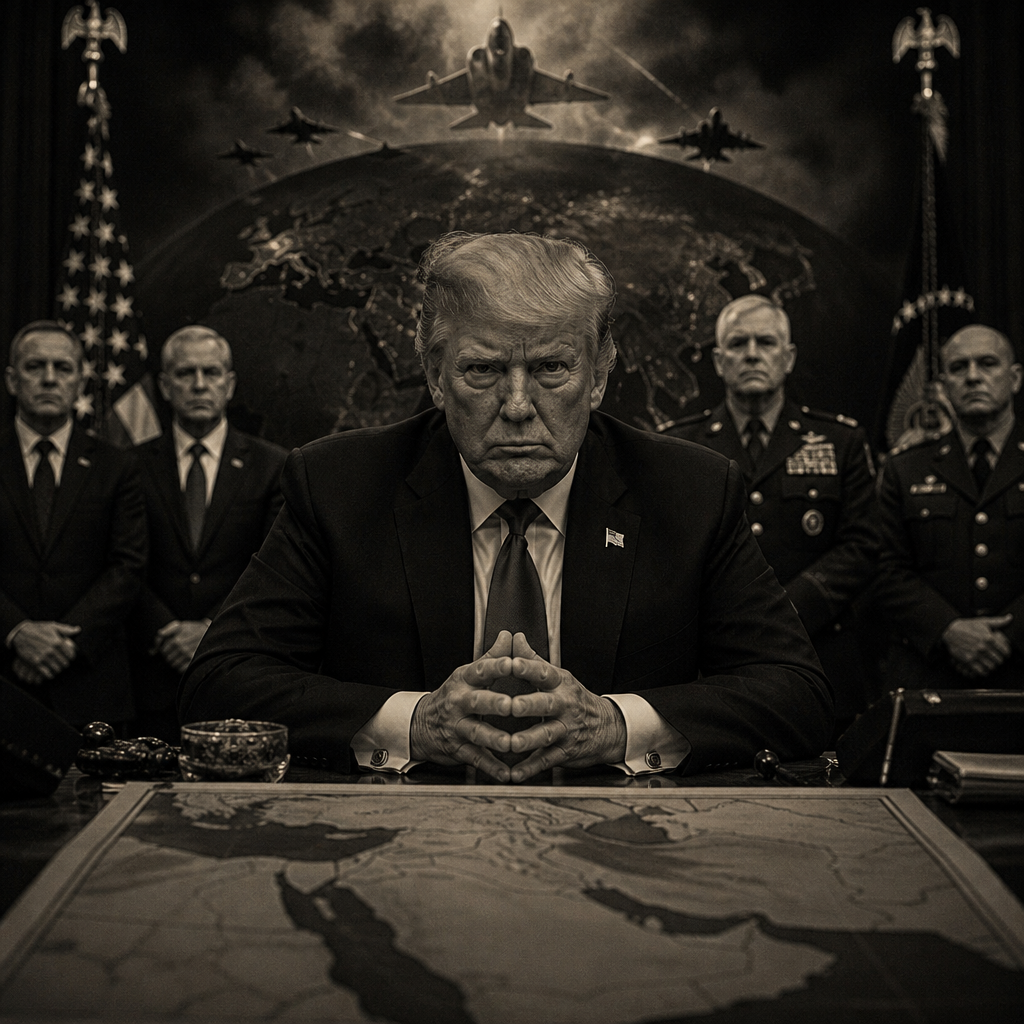
President Donald Trump reportedly favors intensifying the economic campaign against Iran over renewed major military strikes. Washington seeks to choke off the regime's remaining oil-export routes as Tehran struggles under the American blockade. The administration presents this course as measured and sufficient. It claims economic pressure alone can isolate the regime without the risks of renewed combat. Yet the decision rests on an economic preference over military action that subordinates the sword to the ledger. The historic nation requires defense rooted in force when threats endure beyond commerce.
The opposing position holds that sustained sanctions already strain Iranian finances and that further blockade measures will complete the isolation. Proponents argue this path avoids escalation while maintaining pressure through existing naval and financial instruments. They treat the oil routes as the decisive vulnerability. They present economic measures as the prudent continuation of prior policy. This view assumes commerce can substitute for armed resolution when sovereignty stands at stake.
The facts confirm the reported preference. The administration directs resources toward export interdiction rather than preparation for major strikes. No new authorization for expanded operations appears in the record. The blockade remains the central instrument. These choices follow the economic preference over military action without demonstrated necessity.
Authority in the created order places the duty of protection upon the extended household of the realm. Rulers receive the sword to guard lineage, soil, and heritage against persistent threats. Economic instruments function only as subordinate tools under that mandate. When a foreign power continues regional aggression, the patriarchal responsibility requires force proportioned to the danger rather than reliance on ledgers alone.
Scripture records kings who trusted in alliances and tribute yet suffered when they neglected arms. Alfred the Great restored Wessex not by tariffs alone but by mustering the fyrd against Danish incursions. He combined economic denial with decisive field action. The pattern shows that economic preference over military action invites prolonged attrition. The realm pays in blood when rulers delay the necessary strike.
The creedal tradition affirms that civil government exists to restrain evil through lawful coercion. The right-hand kingdom wields temporal power under divine ordinance. When a foreign power threatens the peace of the nations, the duty falls to the Christian prince to employ force proportioned to the threat. Sanctions may harass, yet they do not break the will of a regime committed to regional domination.
The administration's stance contradicts its own earlier recognition of Iranian aggression. It now retreats to measures that preserve commercial abstraction while the threat persists. This retreat weakens the precedent of sovereign states that answered existential challenges with arms. The economic preference over military action therefore stands exposed as a failure of the governing order.
Every economic preference over military action is a dereliction of the patriarchal responsibility to defend the nation. The law applies directly to the reported choice. The facts place the administration's decision within that category. No higher justification appears in the record to exempt the case.
The contradictions in the opposing position begin with its own premise. If the blockade already strains Tehran, the addition of major strikes would complete the isolation rather than replace it. The claim that economic measures suffice rests on an unproven assumption that the regime will yield before exhaustion. History records few such capitulations without the decisive application of force.
President Trump's reported preference for intensifying the economic campaign against Iran over renewed major military strikes is therefore a dereliction of the patriarchal responsibility to defend the nation. The administration must restore military options as the primary instrument. Congress must authorize and fund expanded operations through the armed forces. The horizon is the remainder of the current term. The lawful means are executive orders and appropriations statutes. The cost includes resistance from commercial interests and international bodies that prefer endless negotiation.
Households and parishes must recover the moral perception that national defense belongs to the sword, not the counting house. They must teach sons the ancient duty of arms and reject the reduction of sovereignty to market leverage. Only then will the next generation refuse the economic preference over military action when threats again arise.
The pattern of Western Christendom shows that nations survive when rulers treat defense as a paternal obligation rather than a commercial calculation. The present choice reverses that inheritance. Restoration begins with the recognition that sanctions serve strategy only when force remains credible and ready.