



Read Aloud · Premium
Listen to any dispatch in the Grok vocal voices — a benefit of membership.
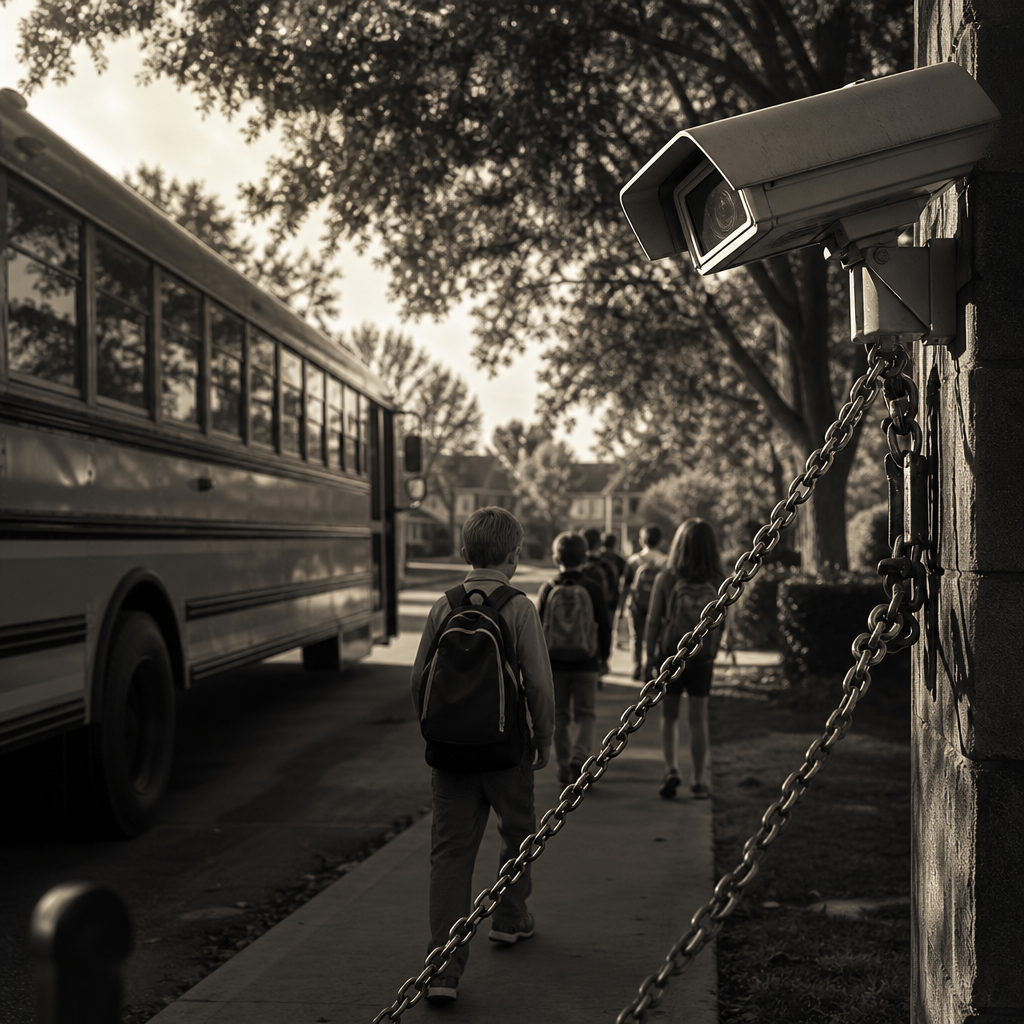
BusPatrol has moved from selective enforcement to universal recording. Its cameras will no longer wait for a violation but will log every passing vehicle on routes that cover neighborhoods in twenty-four states, feeding the data straight into police systems without warrant or individualized suspicion.
The actor here is not a distant federal agency but a private contractor operating inside the one institution parents still trust with their children. School buses, once the safe passage between household and classroom, are being refashioned as rolling nodes of the managerial state.
This expansion rests on the same logic that once turned parish registers into instruments of royal control and later turned census data into tools of ideological classification. Each step claims safety while steadily removing the ancient boundary between the king's highway and the subject's private affairs.
Scripture and the common law of Christendom both treat the free movement of households as a basic mark of ordered liberty. The prophets condemn those who spy out the land to bind its people, and English jurists from Bracton onward held that the road itself does not grant the crown the right to note every traveler.
BusPatrol's plan dissolves that distinction. It reduces fathers and mothers driving children to school into data points whose patterns can be queried at any future date for any administrative purpose the state later invents.
The faithful remnant must therefore treat these buses not as neutral transport but as contested ground. Parents retain both the duty and the authority to refuse participation in systems that convert their children into unwitting agents of surveillance.
Where school boards have already accepted the cameras, they must now be compelled to remove or restrict them. Where new contracts are proposed, they must be rejected outright. Alternative routes, private arrangements, and direct pressure on contractors form the first line of defense.
The household remains the basic unit of resistance. No amount of convenience justifies surrendering the daily record of its movements to a database that answers to neither parish nor polis but only to the expanding priesthood of data.